How NYC Planners Are Designing for Peripheral Attention
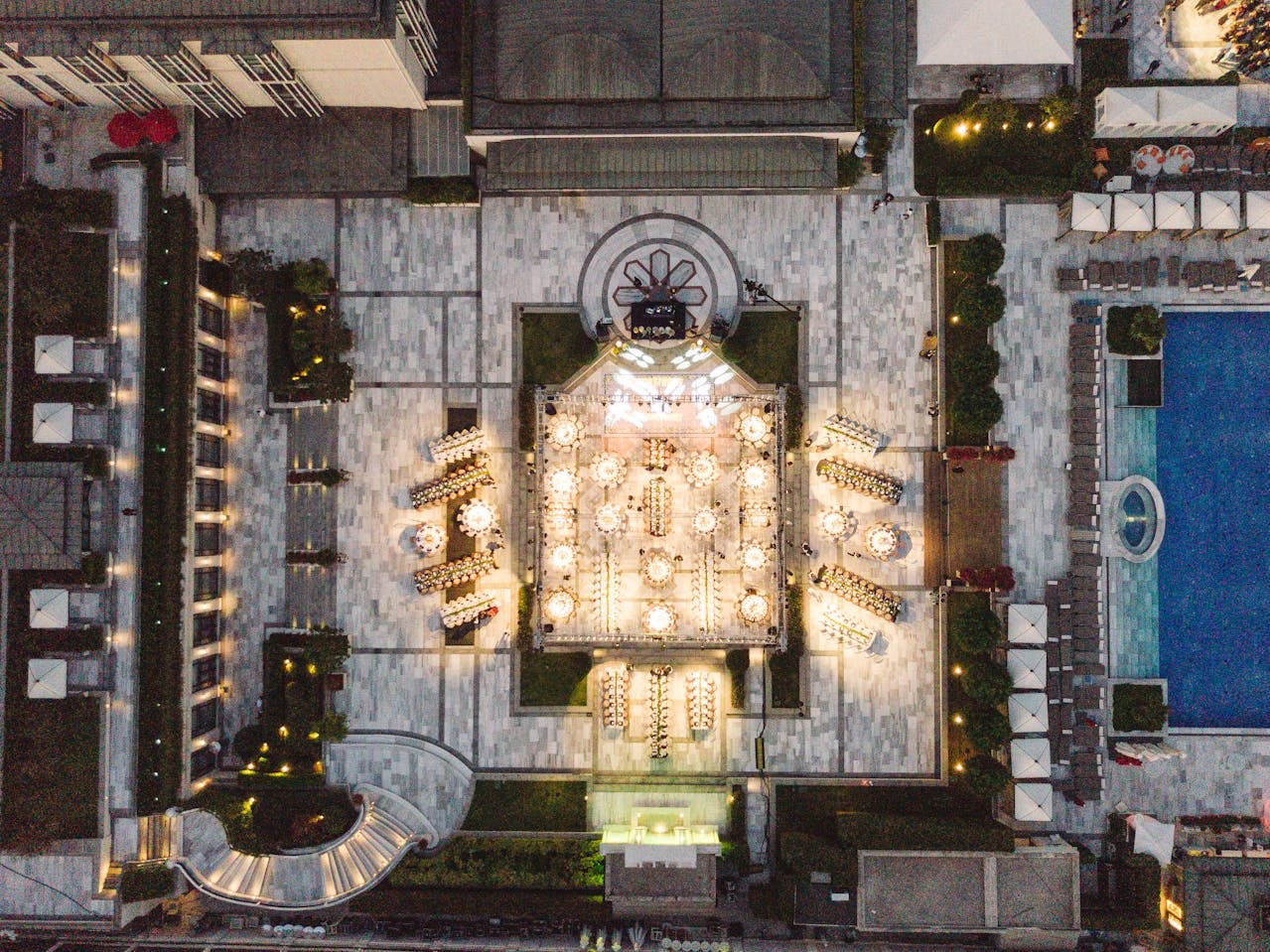
While we would love for every guest to be fully locked into an event, that simply doesn’t happen. The sad reality is that most guests are not paying full attention to what is happening in front of them. Peripheral attention is where decisions are being made. The planners who are paying attention to that layer are building events that hold attention without asking for it directly.
1. Movement Is a Signal
Event guests are always moving about the venue. They are also paying attention to each other. Then, there’s an added layer of event staff constantly moving about the event.
All of that movement can quickly feel chaotic. It can pull guest attention away from the event’s programming. Experienced event planners are mapping movement early. They reduce necessary crossings and tighten service routes to reduce distractions.
2. Lighting Guides Attention
Lighting directly impacts what guests notice in the room. If lighting shifts too aggressively between areas, it fragments attention. Guests are pulled in multiple directions without a clear sense of hierarchy.
There should be a hierarchy with the brightest light on where you want guests to focus the most. Softer secondary lighting should highlight the additional areas where you want guests to focus their attention.
When done well, guests stay oriented even when they are not directly engaged with the main moment.
3. Design Consistency Carries More Weight
A single strong design moment does not hold attention across an entire event.
What does is consistency.
When materials, colors, and textures repeat across spaces, guests begin to recognize the environment without needing to actively process it.
That recognition lives in peripheral attention.
It allows guests to stay grounded as they move, even if they are not focused on any one element.
In NYC events, where layouts often shift between rooms or levels, this becomes critical.
Without that consistency, each space feels like a reset.
With it, the event feels continuous.
4. Edges of the Room Are Not Ignored
For a long time, planners focused on the center of the room.
That is where the energy was expected to be.
Now, more attention is being placed on the edges.
Where guests pause. Where conversations start. Where people observe before deciding to engage.
If those areas feel disconnected or unfinished, they pull attention away from the main experience.
If they are considered and aligned, they support it.
This does not mean over-designing every corner.
It means making sure nothing feels like an afterthought.
5. Transitions Are Being Tightened
Transitions are
Peripheral attention is most sensitive during transitions.
Guests are moving, looking around, deciding what comes next.
If that moment is unclear, attention drops.
In New York City venues, where transitions often involve physical movement between spaces, this becomes even more noticeable.
Stronger planners are reducing ambiguity.
Clear visual cues. Consistent pacing. Subtle guidance that keeps people moving without hesitation.
When transitions hold, the event feels continuous.
When they do not, the experience fragments.
6. Sound Is Being Managed as a Background Layer
Audio used to be an afterthought or treated as a technical element. That’s changing as event planners value guest experience from all angles. If background sound levels are inconsistent, if one area is too loud and another too quiet, it disrupts peripheral attention.
7. Staff Positioning Influences What Guests Notice
Guests are always aware of where staff are, even if they are not interacting with them.
If staff cluster in certain areas or move unpredictably, it creates visual noise.
If they are placed intentionally, they reinforce structure.
In NYC events, where staffing is often tight and roles overlap, this requires more coordination.
Clear zones. Defined responsibilities. Movement that aligns with the flow of the event.
When staff positioning is handled well, it becomes part of the environment.
When it is not, it becomes a distraction.
8. Sponsor Presence Is Integrated Into the Background
There’s no getting around the fact that sponsors require visibility. It’s what they are paying for. Event planners need to balance this need with the event’s overall flow. You want guests to notice who the sponsors are but not have their attention pulled too far away from the event experience.
If they are integrated into the design language, they become part of what guests notice without needing to compete for focus. This is especially important in NYC events, where guests are exposed to high volumes of branded environments. Subtlety holds more weight than volume.
9. Layout Reduces Decision-Making
Peripheral attention is closely tied to how often guests need to make decisions. The more decisions guests are required to make, the more fragmented their attention is. Top event planners design a layout to guide behavior and eliminate the need for guests to make decisions.
They create clear pathways. There are defined zones. Each zone and space has a clear purpose without a required explanation.

Learn More About Designing for Peripheral Attention at The Event Planner Expo
With attention spans getting shorter than ever, event planners have their work cut out for them. Designing for peripheral attention is becoming part of how planners maintain control over the experience. They are creating environments that hold together from every angle.
It’s already influencing conversations around event production, design strategy, and guest behavior as we move toward The Event Planner Expo 2026.
Get tickets to be in the room with NYC planners and producers who are refining how attention is guided, held, and experienced in 2026.