Product Launch Event Checklist: Plan a High-End NYC Launch
Schedule your New York City product launch with confidence using an executive-level framework. The Event Planner Expo connects corporate marketing directors with the city’s premier venues, vendors, and production partners to execute a flawless debut. Secure your tickets now to access the vendor network that makes Manhattan launches successful.
A product launch event checklist provides corporate marketing directors with a structured roadmap for debuting new products in the New York City market. It covers goal setting, venue selection, budget allocation, brand activations, media coordination, attendee management, and post-launch evaluation.
A premium Manhattan launch demands meticulous planning across multiple work streams. Marketing directors who approach product launches with a documented framework consistently deliver higher brand recall and stronger lead generation. The following checklist equips you with the operational blueprint used by top-tier event teams across New York City.
Product Launch Event Checklist: Define Your Goals and Success Metrics
Before engaging venues or vendors, align executive stakeholders on what a successful outcome looks like. A high-end product launch in Manhattan represents a significant investment. Without clearly defined objectives, measuring return on investment becomes impossible. Marketing directors should prioritize two primary goal categories: brand visibility and pipeline generation.
Prioritize Brand Visibility and Media Coverage
Brand visibility drives the narrative around your new product. Executives want to see their launch generate conversation across industry publications and social channels. Track earned media impressions, social mentions, and share of voice relative to competitors who launched in the same quarter. A well-executed New York launch should produce measurable lift in brand search volume within 30 days of the event.
Media coverage amplifies your message beyond the room. Top-tier outlets covering your product validate its market relevance. Set specific targets for tier-one publication mentions, trade press coverage, and influencer posts. Corporate event planners in New York consistently report that launches with pre-arranged media partnerships achieve three times the post-event content distribution compared to those without structured press outreach.
Establish Measurable KPIs
Transform strategic goals into quantifiable metrics that stakeholders can evaluate post-event. Standard benchmarks for premium product launches include: media impressions (target 500,000+ for a New York launch). Qualified leads generated, demo requests received, content downloads, and attendee Net Promoter Score. Each metric ties directly to a specific phase of the launch sequence and informs resource allocation for subsequent events.
Conduct Post-Launch Performance Reviews
Data analysis must begin within 48 hours of event close to capture accurate recall data. Organizations that conduct structured post-launch reviews within two weeks consistently outperform peers in subsequent launches, according to research published in the Journal of Marketing Analytics. This review should compare actual performance against the KPIs established during the planning phase and document vendor performance for future reference.
How Much Should You Budget for a High-End Product Launch in NYC?
Budget planning for a Manhattan product launch requires 12 months of lead time to secure premier venues and production talent. An event production timeline serves as the backbone of your budget execution, ensuring each spend category aligns with deliverable milestones.
Below is the recommended budget allocation for a premium NYC product launch event. The table breaks down each category, its budget share, and what it covers.
| Category | Percent of Budget | What It Covers |
|---|---|---|
| Venue and Catering | 30-35% | Space rental, food, beverages, service staff |
| Production and A/V | 20-25% | Lighting, sound, LED walls, staging |
| Marketing and PR | 15-20% | Media outreach, press kits, social campaigns |
| Talent and Entertainment | 10-15% | Speakers, performers, DJs, hosts |
| Contingency Fund | 10% | Last-minute changes, rush shipping, overtime |
Venue and catering command the largest share at 30-35% because Manhattan’s premium spaces command premium rates. Production and A/V equipment typically consumes 20-25% of total spend, reflecting the technical sophistication required for a polished product reveal. Marketing and public relations account for 15-20%, covering pre-event media campaigns, press kit production, and influencer coordination. Event entertainment and guest talent require 10-15% to maintain engagement throughout the program. A 10% contingency fund protects against the unexpected costs that emerge during complex event logistics.
Corporate event planning budget templates provide a starting point for allocating funds across these categories while accounting for New York’s premium vendor rates.
How Do You Choose the Right Manhattan Venue for a Product Launch?
Venue selection ranks among the most consequential decisions in any product launch event checklist. Manhattan offers over 200 event-capable spaces, from Chelsea industrial lofts to Financial District ballrooms and Midtown penthouse venues. The right venue reinforces your brand positioning, accommodates technical production requirements, and provides the logistical infrastructure for a seamless attendee experience.
Secure Lead Time and Availability
Premium Manhattan venues require 6 to 12 months of advance booking for corporate product launches. Top-tier spaces are booked on a rotating calendar, with prime months (September through November, April through June) filling earliest. Marketing directors should initiate venue scouting immediately after securing internal budget approval. Early booking also provides negotiating leverage on pricing and access to preferred dates.
Allocate Space for Technical Production
A common mistake in venue selection is choosing a space that accommodates guest count but not technical production needs. Allocate 20% to 30% more square footage than the headcount suggests. This additional space accommodates LED walls, lighting trusses, sound rigs, and product demonstration zones. For technology product launches, allocate dedicated areas for hands-on demos where guests can interact with the product directly. These demo zones generate 3x more qualified leads than passive display setups, based on aggregate data from B2B product launch events in the New York market.
Align Venue Character With Brand Identity
Each Manhattan neighborhood conveys a distinct brand signal. Chelsea venues suit creative, modern, or tech-forward brands. Midtown spaces communicate luxury, stability, and corporate authority. Financial District venues align with enterprise technology, financial services, and B2B professional services. Accessibility for media and VIP guests also factors into venue selection. A central location with strong transit connections, clear signage, and photogenic entry points ensures higher attendance and better press coverage.
Design Immersive Brand Activations
A product launch event checklist must prioritize experiential elements that differentiate your brand from the dozens of other launches happening in New York each month. Passive presentation formats no longer capture audience attention. Modern product launches require multi-sensory environments where attendees interact with the brand narrative rather than simply observe it.
Deploy Multi-Sensory Engagement
Engaging multiple senses during a product launch significantly increases message retention. Event neuroscience research published in the Journal of Experiential Marketing demonstrates that multi-sensory brand activations produce 70% higher recall 30 days post-event compared to single-sensory presentations. For a New York launch, this translates to custom scent branding in the arrival area. Curated soundscapes that evolve throughout the program, textured product display walls, and tasting stations that reinforce product attributes.
Corporate event entertainment ideas provide a framework for selecting sensory elements aligned with your brand positioning and target audience preferences.
Structure Interactive Product Demos
Static product displays no longer satisfy discerning New York audiences. Interactive demonstration zones where guests can test products, ask questions, and provide immediate feedback produce measurably higher conversion rates. Product demo stations should be staffed by product experts, not general event staff, to ensure authoritative answers to technical questions.
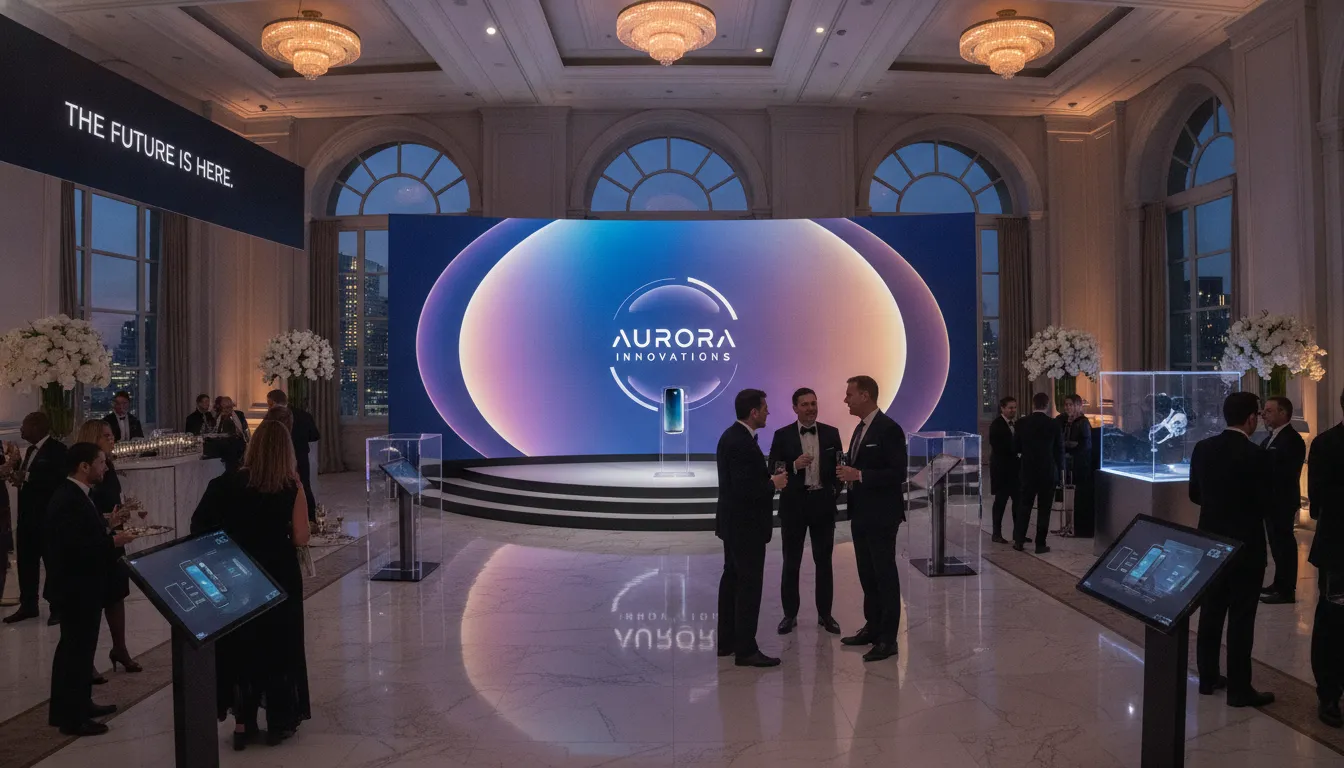
An event technology demo checklist helps marketing directors structure these interactive zones to maximize attendee engagement while collecting actionable lead data.
Integrate AR and VR Technology
Augmented reality and virtual reality tools have moved beyond novelty status and now serve as standard components of premium product launches. These technologies communicate complex product attributes in digestible visual formats while creating shareable moments that extend the event’s reach across social platforms. Apple’s Wonderlust event demonstrated the commercial impact of AR integration, with post-event analysis showing a 30% increase in product consideration among attendees who engaged with AR experiences.
How Do You Coordinate Media and PR for a Product Launch?
Media and public relations execution determines whether your product launch generates coverage beyond the event date. New York’s competitive media landscape requires structured outreach beginning four to six weeks before the event. Marketing directors must coordinate press kit development, media list segmentation, and follow-up cadences as core components of the product launch event checklist.
Develop a Comprehensive Press Kit
A digital press kit provides journalists with the assets required to produce accurate, compelling coverage. Essential components include a product fact sheet, executive bios, high-resolution brand photography, b-roll video footage, and a messaging guide that ensures consistent brand positioning across all coverage. Distribute the press kit to your media list two weeks before the event, with embargoed access to exclusive details for tier-one outlets.
Segment Your Media List Strategically
Not all media contacts deserve equal attention. Structure your outreach in tiers: national business and technology outlets with broad reach, trade publications serving your specific industry. New York metro media covering the local business ecosystem, and industry influencers with engaged social followings. This segmentation allows your team to prioritize follow-up efforts and allocate media relations resources where they generate the highest impact.
Sponsorship activation ideas can supplement your media strategy by creating co-branded content opportunities with media partners who attend or sponsor the event.
Manage the Attendee Experience End to End
The attendee journey begins the moment a guest receives an invitation and continues well after they leave the venue. A refined product launch event checklist treats the entire attendee lifecycle as a designed experience with specific touchpoints that reinforce brand positioning at every stage.
Drive Pre-Event Engagement and Registration
Pre-event marketing activity directly correlates with attendance quality and post-event lead conversion. LinkedIn teaser campaigns targeting B2B decision-makers in the New York metro area generate 40% higher attendance for corporate product launches compared to general social promotion. Based on platform-specific campaign data. Sequential content drops, venue previews, speaker announcements, and exclusive content offers build momentum during the registration window.
Design Seamless On-Site Operations
On the day of the event, operational precision determines attendee satisfaction. Clear wayfinding signage, expedited check-in processes, coat check availability, and visible staff create a frictionless arrival experience. For partner organizations attending the launch, provide dedicated engagement zones with clear value propositions for their own networks.
Execute Structured Lead Follow-Up
Post-event lead follow-up represents the most time-sensitive phase of the attendee management process. Research indicates that 80% of event-generated leads cool within 72 hours of event conclusion. Marketing directors should deploy follow-up communications within 48 hours, prioritizing contacts by tier and engagement level during the event. This structured approach preserves the relationship momentum generated during the launch and accelerates pipeline velocity.
Execute Launch Day and Measure Post-Event Performance
The final phase of your product launch event checklist focuses on flawless day-of execution and rigorous post-event measurement. A clear operational plan for launch day ensures that weeks of preparation translate into a polished presentation.
Launch Day Operational Checklist
- Conduct a full venue walk-through with technical production crew three hours before doors open.
- Complete A/V sound check and lighting cue rehearsal with the production team.
- Brief all speakers, presenters, and product experts on stage flow and timing.
- Activate guest check-in systems and test badge printing workflows.
- Establish a dedicated media check-in point with press kit distribution.
- Run final product demo equipment checks with technical staff.
Working with established New York production partners ensures that each checklist item is executed by professionals who understand the specific requirements of Manhattan venues.
Measure Results Against Established KPIs
Post-event measurement compares actual performance against the KPIs defined during the planning phase. Track media impressions generated, qualified leads captured, social media reach, content downloads, and attendee satisfaction scores. Present these metrics in a structured post-event report that quantifies return on investment for executive stakeholders. Companies that complete post-launch performance reviews within two weeks demonstrate 3x higher year-over-year improvement in launch effectiveness compared to those that delay analysis.
Build an Institutional Knowledge Base
Documenting lessons learned from each product launch creates a compounding advantage for your organization. Maintain a central repository of vendor performance reviews, venue evaluations, attendee feedback summaries, and budget reconciliation data. Over successive launches, this repository becomes a proprietary playbook that reduces planning time, controls costs, and improves outcomes with each iteration.
Frequently Asked Questions
What is a product launch event checklist?
How far in advance should I book a Manhattan venue for a product launch?
What percentage of a product launch budget should go toward production and A/V?
Why is a 48-hour follow-up window important for product launch leads?
How many venues in Manhattan can host corporate product launches?
Ready to Launch Your Next Product in NYC?
Planning a high-end Manhattan product launch requires access to the city’s best venues, production partners, and event talent. The Event Planner Expo brings together the vendor network that corporate marketing directors trust for premium product introductions. Connect with top New York event professionals who understand the specific demands of a high-stakes product launch.
Book your tickets now to attend The Event Planner Expo and build the vendor partnerships that make your next launch a success.
The post Product Launch Event Checklist: Plan a High-End NYC Launch appeared first on The Event Planner Expo.