7 Ways Planners Are Blending Hospitality Design Into Events
Hotels, restaurants, and high-end lounges have always understood something that event spaces are just starting to. People do not respond to decoration. They respond to how a space makes them feel. Design for comfort, flow, and longevity instead of just visual impact. These are the ways planners are already doing it, often without labeling it directly.
Arrival Is an Experience, Not a Transaction
The check-in process at a hotel sets the tone for the rest of the guest’s stay. Ideally, it’s not rushed or disorganized. There’s a guided feeling that eases the guest into the environment. Clients want the same gentle guiding experience for their events. Get rid of the long check-in lines. Add transitions instead of dropping people directly into the middle of the action. This might include a pre-function space, a welcome drink, or even just a shift in layout that prevents congestion.
When guests feel settled from the beginning, the entire event feels more elevated. They are more receptive. They are more present. They are more willing to engage because they were not forced into the experience too quickly.
Creating Spaces Guests Can Stay In, Not Just Pass Through
Traditional event design often prioritizes movement.
Get guests in. Move them through. Transition them quickly.
Hospitality design does the opposite. It creates spaces people want to remain in.
Clients are starting to ask for environments that encourage staying.
Lounges that feel intentional, not leftover. Seating that supports conversation instead of just filling space. Areas that feel complete on their own, not like temporary setups.
This changes how guests engage.
They stop pacing. They settle. They stay longer in one place, which leads to more meaningful interaction.
It also changes how the event feels over time. Instead of constant motion, there is rhythm. There are pauses. There are moments where guests can choose how they want to experience the space.
That choice is what makes the environment feel more refined.
Layer Lighting for Comfort
Lighting isn't just about visibility. Hospitality spaces have multiple layers of lighting that each serve a purpose. Ambient, task, and accent lighting work together to create depth and comfort.
Event planning clients want the same level of detail for their venues. It's the lighting that transforms a warehouse space into an intimate experience. Lighting can elevate a dark and moody space into one that's more welcoming. Lighting is also the ultimate in directional design. People naturally move towards spaces with more comfortable lighting. They will stay longer and engage more.
Materials That Feel and Look Good
A hotel is full of materials. Sure, everyone focuses on the bed linens, but that is just one material. Every material used, from the seating to the curtains, is carefully chosen. The textiles need to look and feel good. Guests have a visual and tactile experience.
Clients want the same level of immersive experience for their event guests. There needs to be a balance of hard and soft materials. The soft materials need to feel nice on the skin. The hard materials can't be overly cold or reflective. The design choices made during planning will be compounded and felt during the event. How they combine will dictate how comfortable the space is to be in. If guests feel uncomfortable, they won't stay long.
Micro-Environments Within Larger Spaces
Even the largest of resorts are rarely a single open space or room. They are divided into zones. Each zone has a specific purpose. The design, energy level, and intimacy of the space all support that purpose.
Top event planners are using the same strategy for their events. Even if the venue is one large open space, they are creating zones. One zone is designed for conversation. Another zone is designed for dancing. Another could be ideal for eating. Yet another could be where the entertainment and stage are. Each of these areas will have a specific purpose that dictates the sound levels, energy, and intimacy of it. Guests can move about the event to the area that suits them the best.
Noise Control and Acoustic Comfort
Loud and jarring sounds are mentally exhausting. Hospitality settings address this by dampening and blocking unpleasant sounds. The goal is to create a peaceful and enjoyable experience. No guest's stay is interrupted by unwarranted noise pollution.
Unfortunately, sound is one of the most overlooked areas of event design. Inexperienced event planners don't pay attention to volume or tuning. Except when you get these wrong, it's impossible to have a conversation in the space. Event planners can learn from the hospitality industry by refining acoustics. Add soft materials to absorb sound. Change the layout to block sound and reduce echo. Move high-energy zones away from quieter ones.
Integrate Food and Beverage Into the Design
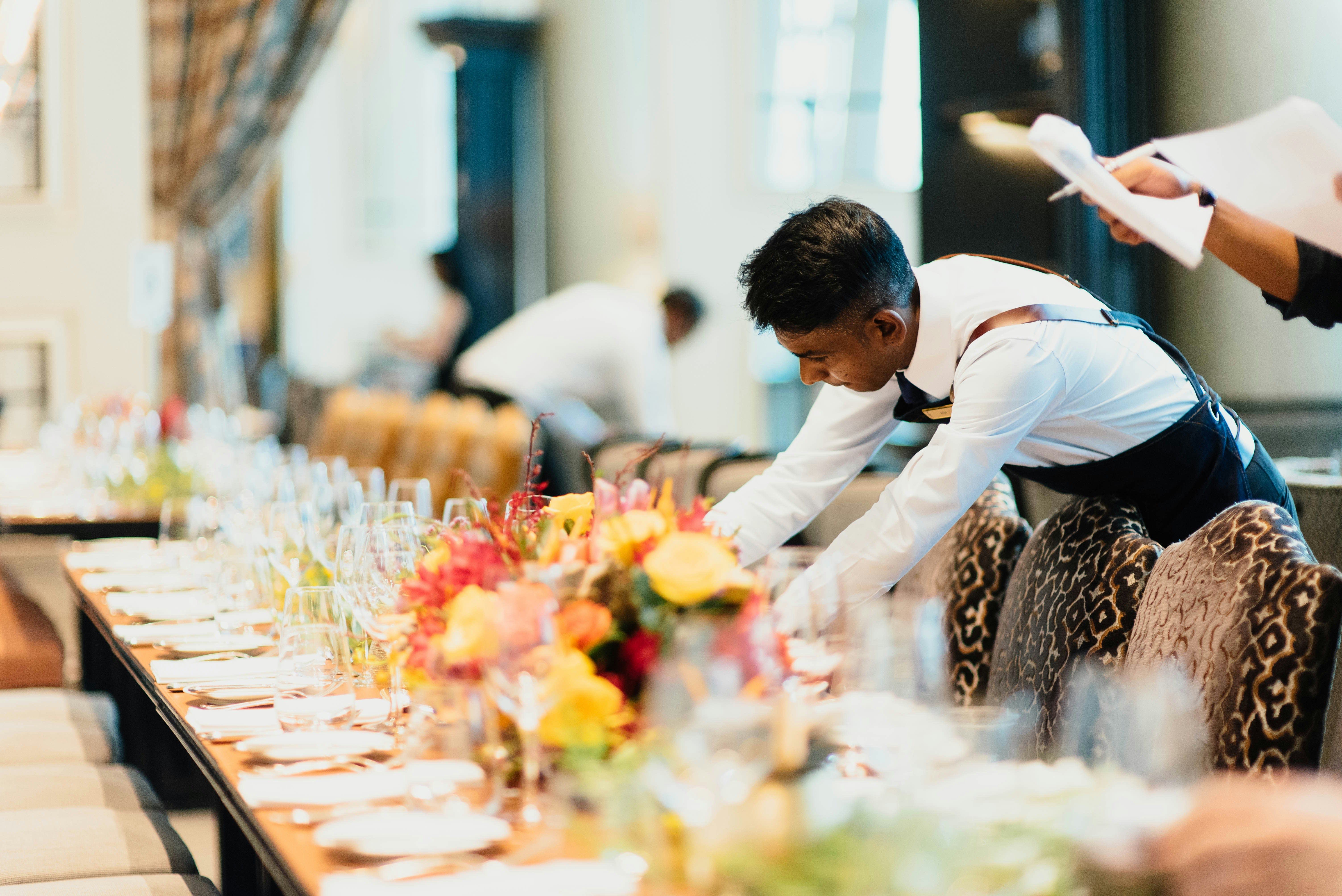
In the hospitality industry, food and beverage go hand in hand with the environment. It's all a part of the guest experience. For event planners, this is a crucial point to understand. Event guests feel the same about both experiences. No one wants to attend an event for hours with nothing to eat or drink. Guests would leave when they got hungry or thirsty and not come back.
Clients want the food and beverages served to feel like a part of the event. The event shouldn't stop for food service. Catering displays shouldn't be shoved into a corner as an afterthought. Beverage stations should be easily accessible. However, they need to be carefully placed so that people waiting for drinks do not create bottlenecks in the overall flow.

Learn More About Blending Hospitality Design at The Event Planner Expo
Blending hospitality design into events is about mindset. Stop designing for visual appearance and start focusing on guest experience. Clients want their guests to feel comfortable. The event should feel easy, not just be pretty.
The planners who understand this are not adding more elements. They are refining what already exists. They are designing with intention. They are editing more than they are adding. They are thinking through the full experience at The Event Planner Expo.
Join the conversations shaping the future of events. Get your tickets to The Event Planner Expo 2026.