Conference Learning ROI: A Practical Team Guide
A great conference can spark bold ideas, useful contacts, and a fresh plan for your team. Yet those gains are easy to lose when no one defines success before the event or follows through afterward.
Ready to maximize your conference learning ROI? Get your Corporate Event Planner Tickets today and prepare your team for success!
Conference learning ROI measures the business value your team creates from the knowledge, relationships, and ideas gained at an event compared with the full cost of attending. A strong measurement plan starts with clear goals and baseline data. It then tracks what attendees learn, what they put into action, and which results change over the next 30 to 90 days. The goal is not to place a dollar value on every conversation. It is to connect the most useful event takeaways to real work. Such as faster planning, better vendor choices, stronger campaigns, new partnerships, lower costs, or more qualified opportunities.
This guide gives event and marketing leaders a simple formula, a before-and-after scorecard, and a 30-day action plan. Use it to make the value of conference learning clear to your team and senior leaders.
It also creates a fair way to compare conferences over time. Instead of judging an event by energy or attendance alone, you can see which programs help your people make better choices, build stronger ties, and put useful ideas into practice.
What conference learning ROI actually measures
Conference learning ROI is more than a count of sessions attended or business cards collected. It shows whether the team used event learning to improve a decision, process, campaign, partnership, or result. That distinction matters because activity is not the same as value.
Inputs, outputs, and outcomes
Start by separating three types of measures. Inputs are the resources invested, including tickets, travel, lodging, meals, and employee time. Outputs are the immediate items brought home, such as notes, contacts, ideas, and vendor options. Outcomes are the changes that follow when the team puts those outputs to work.
For example, attending a session is an output. Using that session’s framework to shorten a planning cycle is an outcome. Meeting a potential partner is an output. Starting a useful partnership that expands reach or adds revenue is an outcome.
Direct and indirect value
Direct value can often be estimated in dollars. It may include savings from a better contract, revenue tied to a new lead, or hours saved through a better workflow. Indirect value can still be measured, even when it does not have an immediate dollar amount. Examples include stronger team skills, a wider partner network, or greater confidence in a major decision.
Use both types in your report, but label them clearly. This keeps the analysis credible while giving leaders a full view of what the conference produced.
Agree on the value categories before the event. When finance, marketing, and event leaders share the same definitions, the final report is easier to review. The team can also spend less time debating the method and more time acting on the strongest lessons.
Set measurable learning goals before the conference
A useful ROI report begins before anyone enters the venue. Ask each attendee to choose one to three business goals tied to current team needs. A focused goal gives the person a filter for choosing sessions, speakers, and conversations.
Start with the business problem
Write down a problem the team needs to solve. It might be a slow event planning process, weak sponsor retention, low campaign response, or a need for new production partners. Then describe the result you want and the proof that would show progress.
- Problem: The team spends too long reviewing event technology vendors.
- Goal: Build a shortlist and a fair review process.
- Proof: Compare at least five options and cut review time by a set amount.
Choose a baseline and target
A baseline records where the team stands before the event. Without it, improvement becomes hard to prove. Capture the current cost, time, quality score, lead volume, or other metric tied to the goal. Then set a realistic target and review date.
Attendees should also identify which people and sessions can help. Reviewing the event’s featured speakers and conference schedule in advance makes it easier to build a focused learning plan instead of making choices in the moment.
How should your team document insights during the event?
Good notes make post-event action much easier. Ask every attendee to use the same short template so the team can compare ideas and spot themes. The best system is simple enough to complete between sessions.
A five-part capture method
- Record the insight. Write the idea in one clear sentence.
- Connect it to a goal. Note which team problem or target it supports.
- Name the next action. State what should happen after the event.
- Save the source. Add the speaker, session, or contact linked to the idea.
- Assign a value signal. Mark whether it could save time, reduce cost, improve quality, grow reach, or create revenue.
Capture contacts with purpose
A contact list has little value without context. For each useful conversation, record why the person matters, what both sides discussed, and the next step. Add a follow-up date while the exchange is still fresh.
End each conference day with a 15-minute team check-in. Ask each person to share one key lesson, one strong contact, and one action worth testing. This quick habit prevents useful ideas from getting buried and helps the team adjust the next day’s plan.
Calculate implementation value with a simple formula
Use a formula that compares verified or reasonably estimated value with the total cost of attending. Keep assumptions visible so leaders can understand how the result was built.
The conference learning ROI formula
Conference learning ROI (%) = [(implementation value + avoided costs + opportunity value) – total conference investment] / total conference investment x 100
Total conference investment should include more than ticket cost. Add travel, lodging, meals, and the value of staff time spent preparing, attending, and sharing results. This gives you an honest view of the investment.
A simple worked example
Suppose a team invests $8,000 to attend. In the next 90 days, it can verify $5,000 in time savings and $4,000 in avoided vendor costs. It also connects one qualified opportunity worth an estimated $3,000 based on the team’s normal method for valuing opportunities. The total measured value is $12,000.
The formula is [($12,000 – $8,000) / $8,000] x 100, which equals 50%. The team should state which amounts are verified and which are estimates. If the opportunity has not closed, report it as potential value rather than earned revenue.
Use leading and lagging signals
Leading signals show whether the team is moving toward value. They include follow-up meetings booked, ideas selected for tests, and action items completed. Lagging signals show the final result, such as revenue, cost savings, cycle time, or campaign performance. Report both when final outcomes need more time.
Use a before-and-after conference ROI scorecard
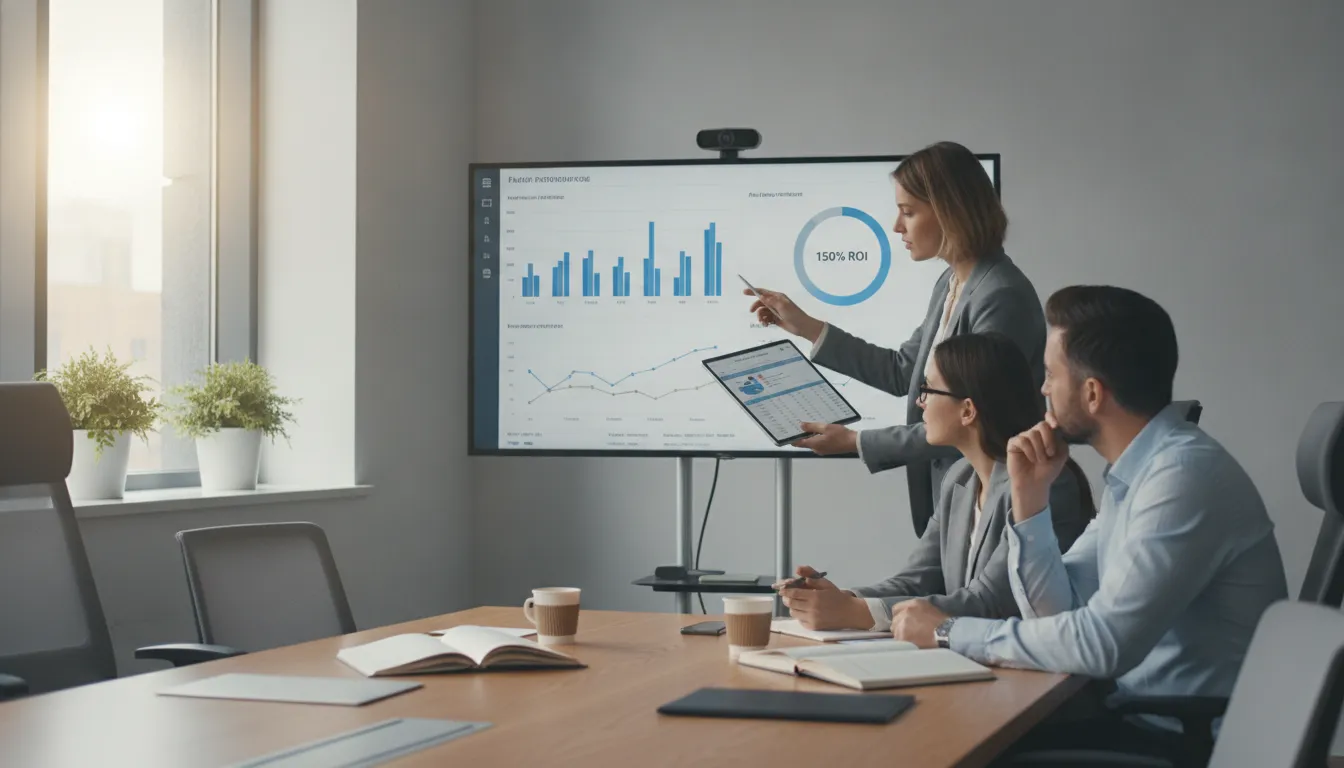
A scorecard keeps the team focused on a small set of useful measures. Complete the baseline before the event, update progress at 30 days, and record a final result at 60 or 90 days when needed.
| Measure | Before-event baseline | 30-day target | Result and evidence | Owner |
|---|---|---|---|---|
| New ideas selected for tests | 0 | 3 ideas chosen | List of approved tests | Marketing lead |
| Qualified partner follow-ups | 0 | 5 meetings held | Meeting notes and next steps | Partnerships lead |
| Planning cycle time | Current average | Improvement target | Project records | Event operations lead |
| Vendor cost or risk | Current quote or issue | Target savings or reduction | Quotes, contract, or review | Procurement owner |
| Knowledge shared with team | No shared session | One recap and resource hub | Attendance and shared files | Conference attendee |
Make every measure auditable
For each result, name the evidence that supports it. Evidence might include a project report, contract, meeting note, campaign dashboard, or approved test plan. This makes the report more useful and reduces debates about whether a result came from the event.
Do not force every benefit into dollars
Some gains matter before they can be priced. A better brief, stronger team skill, or clearer vendor choice may reduce risk without producing an immediate dollar return. Track these gains in a separate section and explain the decision they improved.
Turn event learning into a 30-day action plan
The first month after the conference determines whether notes become results. Give every action one owner, a due date, and a clear proof of completion. Keep the list short enough for the team to finish.
Days 1 to 3: sort and share
Within three business days, attendees should clean up their notes, rank insights by value and effort, and complete promised follow-ups. Hold a short recap with the wider team. Focus on what should change, not a long replay of every session.
Days 4 to 14: choose and test
Select the strongest one to three ideas for action. Build small tests with clear owners and measures. Meet the most relevant new contacts and record whether each relationship should advance, pause, or close.
Days 15 to 30: measure and report
Review the scorecard, gather evidence, and compare early results with the baseline. Report leading signals when final outcomes are not ready. End the 30-day review with a decision for each action: expand it, change it, continue measuring it, or stop it.
This plan also helps leaders decide who should attend next time. The right group can divide learning goals, cover more useful sessions, and bring lessons back to the whole company.
How do you report conference outcomes to leadership?
Senior leaders need a clear link between the event investment and business priorities. Keep the main report to one page, then attach the full scorecard for anyone who wants more detail.
Lead with the decision, not the diary
Start with the total investment, the top goals, and the most important results. State what the team recommends doing next. Avoid opening with a session-by-session recap, which makes leaders work too hard to find the value.
Separate verified, estimated, and potential value
Verified value has supporting evidence. Estimated value uses a stated method or reasonable assumption. Potential value depends on a future outcome, such as an opportunity that has not closed. Keeping these groups separate builds trust and makes later updates easy.
Close the report with the next review date and the actions still in progress. This shows that conference learning ROI is an ongoing management practice, not a one-time claim made after the event.
Frequently asked questions about conference learning ROI
When should a team measure conference ROI?
Set goals and baseline measures before the event. Review leading signals within 30 days, then check final outcomes at 60 or 90 days when results need more time. Use the timing that fits the team’s normal sales, planning, or campaign cycle.
What costs belong in the conference investment?
Include tickets, travel, lodging, meals, and staff time. Add any other direct cost needed to prepare, attend, or share the learning. A complete cost estimate makes the final ROI result more credible.
How can you measure value that is not financial?
Use clear evidence tied to a decision or work result. Track skills gained, processes improved, useful contacts, tests launched, risks reduced, or time saved. Report these gains separately from direct financial value.
What if the conference does not create a positive ROI right away?
Report early signals and the actions still underway. Note what the team learned about future attendance, goal setting, or follow-through. A weak result can still guide a better choice and a stronger plan for the next event.
Ready to put conference learning ROI into action?
Build your goals before the event, use the scorecard during follow-through, and give each insight an owner. A focused plan makes it easier to show how conference learning supports real business results.
Review corporate event planner tickets and prepare your team to turn valuable connections and ideas into measurable action.
The post Conference Learning ROI: A Practical Team Guide appeared first on The Event Planner Expo.