Sustainable Event Planning: Corporate Event Guide
Sustainable event planning builds environmental goals into every decision, from venue selection and vendor contracts to catering, travel, and post-event reporting. For corporate teams, the strongest plan sets measurable targets early, gives each partner clear standards, makes sustainable choices easy for attendees, and proves results with reliable data.
Get tickets to The Event Planner Expo and meet innovative partners for your next corporate event.
A sustainable corporate event does not need to feel limited or less polished. Thoughtful choices can improve the guest experience, reduce avoidable spending, and give marketing leaders a stronger story to share with stakeholders. The key is to treat sustainability as an operating standard rather than a last-minute feature.
Build a sustainable event planning strategy
Start by defining what sustainability means for this event. A product launch, executive summit, and multi-day conference have different impact areas. One may need to prioritize freight and temporary builds, while another may focus on attendee travel, food waste, or energy use. A short written policy keeps the team aligned when budget or schedule pressure creates tradeoffs.
Set a baseline and measurable goals
Review data from a comparable past event before setting targets. Useful baselines include total waste, food ordered per attendee, printed materials, energy use, and the percentage of guests who traveled by lower-impact options. If historic data is unavailable, ask the venue and major vendors what they can measure this time so the event creates a reliable baseline for the future.
Turn priorities into specific targets with an owner and deadline. For example, aim to reduce printed materials by 80 percent, divert a defined percentage of waste from landfill, or source a set share of menu ingredients locally. The Stanford sustainable event planning guide offers practical ideas for waste, food, purchasing, and communication.
Assign ownership across the team
Name one sustainability lead, but do not make that person responsible for every task. Give procurement responsibility for vendor standards, operations responsibility for venue and waste plans, marketing responsibility for attendee communication, and finance responsibility for tracking cost differences. Add each decision and deadline to your event production timeline so it receives the same attention as registration, programming, and production.
How do you choose a more sustainable venue?
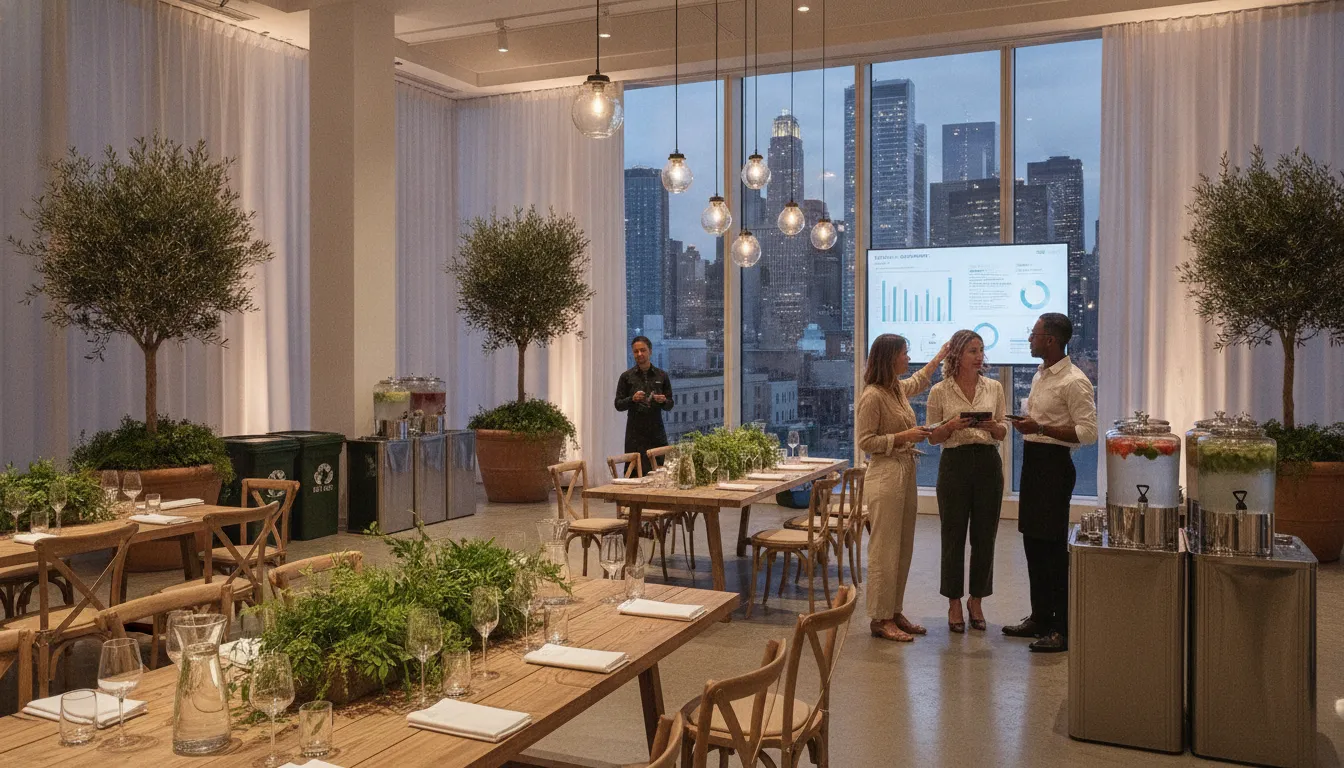
The venue influences transportation, energy, water, catering, and waste, making it one of the most important decisions in sustainable event planning. Ask direct questions during the site search and request evidence instead of accepting broad environmental claims.
Evaluate access and building operations
Choose a location that is easy to reach by public transportation and close to appropriate hotels. Ask whether the venue uses efficient lighting and climate controls, monitors water use, provides refill stations, and can share recent energy or waste data. A central location can also improve attendance because guests spend less time managing complicated transfers.
Inspect the waste system
Ask who hauls waste, which materials are accepted locally, how bins are labeled, and whether staff monitor sorting stations. Confirm that composting is actually available before promising it in attendee communications. Request a sample post-event waste report and clarify when final data will be delivered.
Use a consistent scorecard
Compare every venue using the same questions and scoring scale. Include transit access, energy practices, water systems, waste reporting, reusable serviceware, local sourcing, accessibility, and the venue team’s willingness to collaborate. A scorecard makes the final choice easier to explain to leadership and prevents a beautiful room from hiding operational weaknesses.
Set clear sustainability standards for vendors
Your venue cannot deliver the entire plan alone. Caterers, rental companies, audiovisual teams, decorators, printers, transportation partners, and exhibitors all shape the final impact. Share requirements during the request-for-proposal stage, then place agreed standards in contracts and production documents.
Ask vendors for specific practices and proof
Replace vague questions such as “Are you sustainable?” with operational questions. Ask how a caterer forecasts portions, where extra food goes, and which service items are reusable. Ask rental partners how often inventory is reused and how damaged materials are handled. Ask production partners about efficient lighting, freight consolidation, and the disposal plan for custom builds.
Explore the 2026 exhibitors at The Event Planner Expo to identify event partners and prepare focused questions before starting vendor conversations.
Make reporting part of the agreement
Tell vendors what data you need, in which format, and by what date. Useful records may include food ordered and donated, waste weights, rental inventory, freight mileage, energy use, and purchasing details. A vendor that cannot provide perfect data may still be a good fit, but the gap should be visible before the event so your final report does not rely on guesses.
Reduce waste without reducing the guest experience
Waste prevention often improves an event because it removes clutter and unnecessary steps. Digital schedules can update instantly. Refillable water stations reduce bottle piles. Reusable decor can look more intentional than disposable items. Begin with the materials guests will see and use most often.
Design out waste before ordering
Review every printed piece, giveaway, sign, badge component, and decor element. Ask whether it is necessary, whether it can be reused, and what will happen to it after the event. Use modular signage that can be updated, rent decor when possible, and select useful gifts rather than low-value promotional items.
Plan catering around real attendance
Use current registration data and historic attendance patterns to improve food forecasts. Offer smaller portions with easy replenishment rather than putting all food out at once. Discuss plant-forward options, local ingredients, reusable serviceware, donation partners, and composting with the catering team. Confirm food-safety and donation procedures well before doors open.

Make sorting intuitive
Place waste stations where guests naturally pause, such as dining areas and exits. Keep bin configurations consistent and use clear signs showing the actual materials served at the event. Station trained staff near busy areas when possible. A technically complete recycling plan will still fail if guests cannot understand it in seconds.
How can attendees support sustainability goals?
Attendees are more likely to participate when choices are convenient and communication is positive. Explain the plan before arrival, reinforce it on site, and share the outcome after the event. Focus on what guests can do rather than lecturing them about what they should avoid.
Communicate before the event
Include public transit routes, walking directions, hotel proximity, refill-station details, and digital ticket instructions in confirmation emails. If you ask guests to bring a reusable bottle or choose a travel option, explain why it matters and how it supports the event’s measurable goal.
Use technology with purpose
An event app or mobile site can replace printed schedules, maps, and session updates while helping guests navigate more easily. Technology should solve a clear problem rather than add another platform. Review current event technology trends for corporate planners when selecting tools that support both engagement and reporting.
Give attendees a simple action plan
- Choose lower-impact travel: Share transit, walking, and carpool options before registration closes.
- Use digital event resources: Put schedules, maps, and updates in one mobile-friendly place.
- Refill instead of replacing: Make water stations easy to find and convenient to use.
- Sort materials correctly: Match clear waste-station signs to the items available on site.
- Share the results: Tell attendees what their participation helped the event accomplish.
Measure and report the results that matter
Measurement turns sustainability from a marketing claim into a management practice. Collect data that connects directly to your goals, document limitations, and compare results with the baseline. Avoid overstating success when data is incomplete.
Build a practical event scorecard
| Goal area | Metric | Evidence source |
|---|---|---|
| Waste | Percentage diverted from landfill | Venue or hauler report |
| Food | Meals served, surplus, and donations | Caterer records and donation receipts |
| Materials | Printed items avoided and rentals reused | Orders and vendor inventory |
| Travel | Attendee transportation choices | Registration or post-event survey |
| Engagement | Participation and attendee feedback | App analytics and survey results |
Report progress honestly
Share what worked, what fell short, and what the next event will change. Leadership needs a concise view of results, costs, and operational lessons. Attendees may prefer a shorter update focused on their contribution. Honest reporting builds trust and creates a useful record for the next planning cycle.
Compare your results with broader corporate event planning trends to help your team identify the next practical improvement.
Discover exhibitors who can help turn your sustainable event plan into a standout guest experience.
Turn sustainability goals into a stronger business case
A sustainable plan is easier to approve when leaders can see how it supports the event’s broader purpose. Connect each proposed action to a business result such as lower material costs, smoother guest movement, stronger brand trust, or better vendor accountability. This keeps the conversation focused on value rather than treating sustainability as an optional expense.
Show costs and savings clearly
Build a simple comparison for major choices. Include the initial cost, likely savings, operational effect, and the quality of available data. A reusable sign system may cost more in the first year but become less expensive across several events. Digital resources may reduce printing and make schedule changes faster. Clear comparisons help finance and leadership understand the full decision.
Protect the guest experience
Test changes from the attendee’s point of view. A refill station needs to be easy to find. A mobile schedule needs to load quickly. Transit directions need to be clear for visitors who do not know the city. Sustainability works best when the preferred action is also the easiest action. That approach encourages participation without making guests feel responsible for solving operational problems.
Create a repeatable planning process
After the event, store scorecards, vendor reports, survey findings, and lessons in one shared location. Mark which requirements should become standard contract language and which targets need more work. A repeatable process reduces research time, gives vendors clearer expectations, and allows the team to focus on improving results rather than rebuilding the plan from the beginning.
Your corporate sustainable event planning checklist
- Define priorities: Select the impact areas most relevant to the event.
- Establish a baseline: Gather comparable data or plan to create it.
- Set measurable goals: Give every target an owner and deadline.
- Score venues consistently: Review transit, energy, water, waste, food, and reporting.
- Write vendor standards: Add requirements and reporting dates to contracts.
- Prevent waste: Review materials, catering, decor, and giveaways before ordering.
- Prepare attendees: Communicate travel, digital resources, refill stations, and sorting.
- Collect evidence: Request final records from vendors immediately after the event.
- Share lessons: Report progress honestly and improve the next plan.
Frequently asked questions
What is sustainable event planning?
Sustainable event planning is the process of including environmental and social goals in event strategy, purchasing, operations, attendee communication, and reporting. It focuses on measurable decisions rather than isolated green features.
How can a corporate event become more sustainable?
Begin with a baseline and a few measurable priorities. Choose an accessible venue, set clear vendor standards, prevent unnecessary waste, communicate easy actions to attendees, and collect evidence after the event.
What sustainability metrics should event planners track?
Useful metrics include waste diversion, food surplus and donations, printed materials avoided, reusable inventory, attendee travel choices, energy use when available, and participation in sustainability programs.
How do you get vendors to support event sustainability goals?
Share requirements during the proposal stage, ask specific operational questions, place agreed standards in contracts, name data owners, and set deadlines for final reporting.
Meet partners for your next corporate event
Sustainable event planning becomes easier when venues, vendors, marketers, and operations teams work toward the same measurable goals. Start with the checklist, focus on the decisions with the greatest impact, and improve the plan with every event.
Get your tickets to The Event Planner Expo and connect with event partners in New York City.