11 Minimalist Event Design Concepts That Still Feel Full and Engaging
Minimalism in event design is often misunderstood. It is not about doing less or leaving a space feeling empty. It is about precision. Clients are asking for cleaner and more intentional environments. They’re reacting to events that feel overcrowded and visually exhausting. Minimalist design solves that by removing distractions and making every element feel purposeful.
Anchor the Space With a Focal Point
Anchor your minimalist design with a single strong focal point. The focal point can be anything that commands and holds attention. The right choice will depend on the type of event. It could be a stage. It could be an art installation. For some events, it’s a bar.
The right statement element creates a sense of design and fullness without adding more things. There are also clear sightlines from anywhere in the venue to the focal point. The layout silently directs guests where you want them to go.
Repetition Instead of Variety
Traditionally, variety was the rule when designing an event. Embrace repetition over variety to maintain the minimalist approach. Use the same material throughout the event. Use it in different design capacities. Choose a color and then use it throughout the space. Doing so creates cohesion.
Repetition also reduces decision fatigue. Guests are not processing new information constantly. They are moving through a space that feels consistent, which allows them to focus on the experience itself.
Negative Space That Is Designed, Not Left Over
Empty space is often treated as something to fill.
Minimalist design treats it as something to shape.
Negative space is intentional. It is placed with purpose. It creates contrast that allows key elements to stand out more clearly.
Without negative space, everything competes.
With it, the environment feels balanced.
Guests are able to focus. They are able to move without obstruction. They are able to engage without feeling overwhelmed.
The space feels calm, but not empty.
It also gives the event room to breathe over time. As guests move and interact, the space adapts without feeling crowded.
Lighting That Creates Depth
When there is minimal decor, lighting becomes more important. Gradients add dimension. Layered lighting creates movement and depth. The right type of lighting makes a large venue more comfortable to be in. Dim the areas that you don't want people to go. Highlight the areas that you want people to focus their attention on. This is a subtle way of directing people without adding more stuff or signage to the space.
Materials Carry Visual Weight
Textures and textiles carry visual weight. When there are fewer elements in the room, these materials become more important. Different types of textures create depth and contrast. They reflect the light differently. They feel different when guests touch them.
Guests will notice the quality of the materials chosen. Fabrics and materials that are associated with higher quality will give the event an elevated feel. There is a richness to the room that isn't lost in the clutter.
Layouts That Feel Open but Not Empty
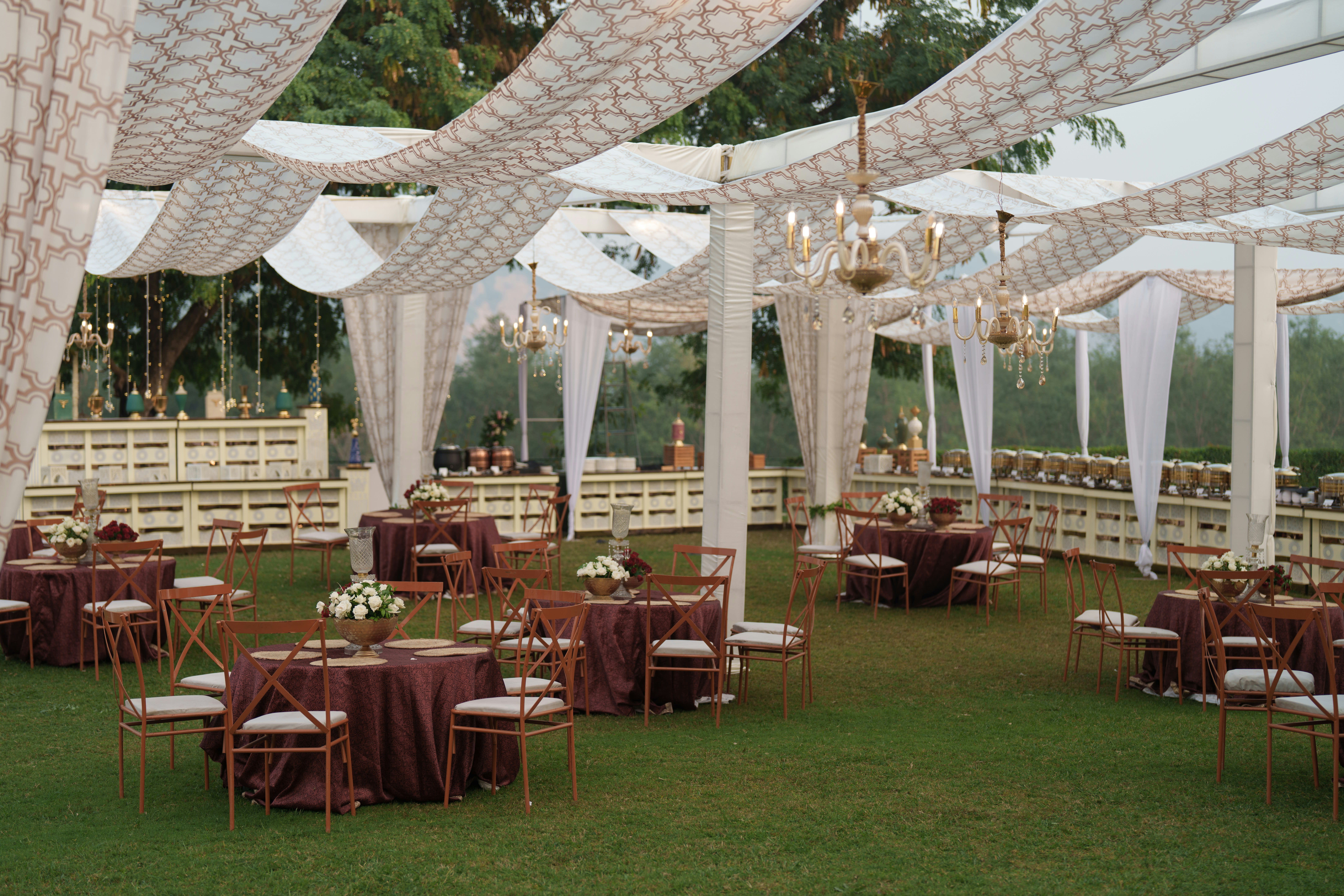
The most common mistake event planners make is thinking that minimalism means nothing. The result is a large open space that feels empty and uncomfortable. The problem is that the space is undefined. There’s no structure or obvious boundaries to help guide guests.
Guests should feel like they understand the space without needing to be directed. Minimalism done well creates an open feeling without feeling empty. There’s a balance that keeps the space feeling defined.
Fewer Elements, Placed More Precisely
Because there are fewer design and decor elements, everything used must be placed with intention. There’s no filler, so there’s nothing for weaker elements to hide behind. Look for pieces that contribute to the event’s purpose.
When done well, the scape feels controlled, intentional, and considered. Guests aren’t going to identify and vocalize the individual design choices. They will appreciate the overall effect. They will also appreciate how the event functions more smoothly.
Sound and Silence Used as Design Tools
A minimalist design is more than just the visual elements in the room. Smart NYC event planners also think about the sound acoustics. They think about where the music should be and how loud. They create volume variation across the space. In their hands, sound is a tool, not an accessory.
This tactic is smart because it creates another sensory layer to the event without adding visual clutter. Guests experience variation without physical transitions.
Subtle Transitions Instead of Major Changes
Avoid having abrupt shifts in your minimal event design. This isn’t the time or place for drama. Instead, subtle shifts are the way to go. Change lighting gradually. Adjust the music slowly. Position the layout to feel like a progression and not a full reset. You want to guide guests, not overwhelm them. The guest experience unfolds and evolves, but doesn't distract by demanding attention away from the event's purpose.
Integrated Functions
Everything needs to work together in a minimalist design. That’s where form meets function. The drinks bar is integrated into the environment instead of being placed awkwardly off to the side. Seating is arranged to create pathways and conversation spaces. Even the staff services areas are created to align with the event’s overall aesthetic.
That integration also improves flow. Guests do not have to search for what they need. It is naturally part of the environment.
Learn More About Minimalist Event Design at The Event Planner Expo
As event planners, we know that minimalism isn’t easier to achieve because there is less. Quite the opposite, it’s harder because there is less room for error. When it’s executed correctly, minimalism has a stronger impact. It’s clear and focused in its message.
Conversations about minimalism are already happening among planners who are refining their approach. They are happening at The Event Planner Expo 2026, where the focus is not on adding more, but on designing better. The goal is to create an experience that holds attention without needing to compete for it.
The future of event planning starts with the right conversations. Get your tickets today.