9 Event Styling Ideas Inspired by Fashion Week and Runway Design
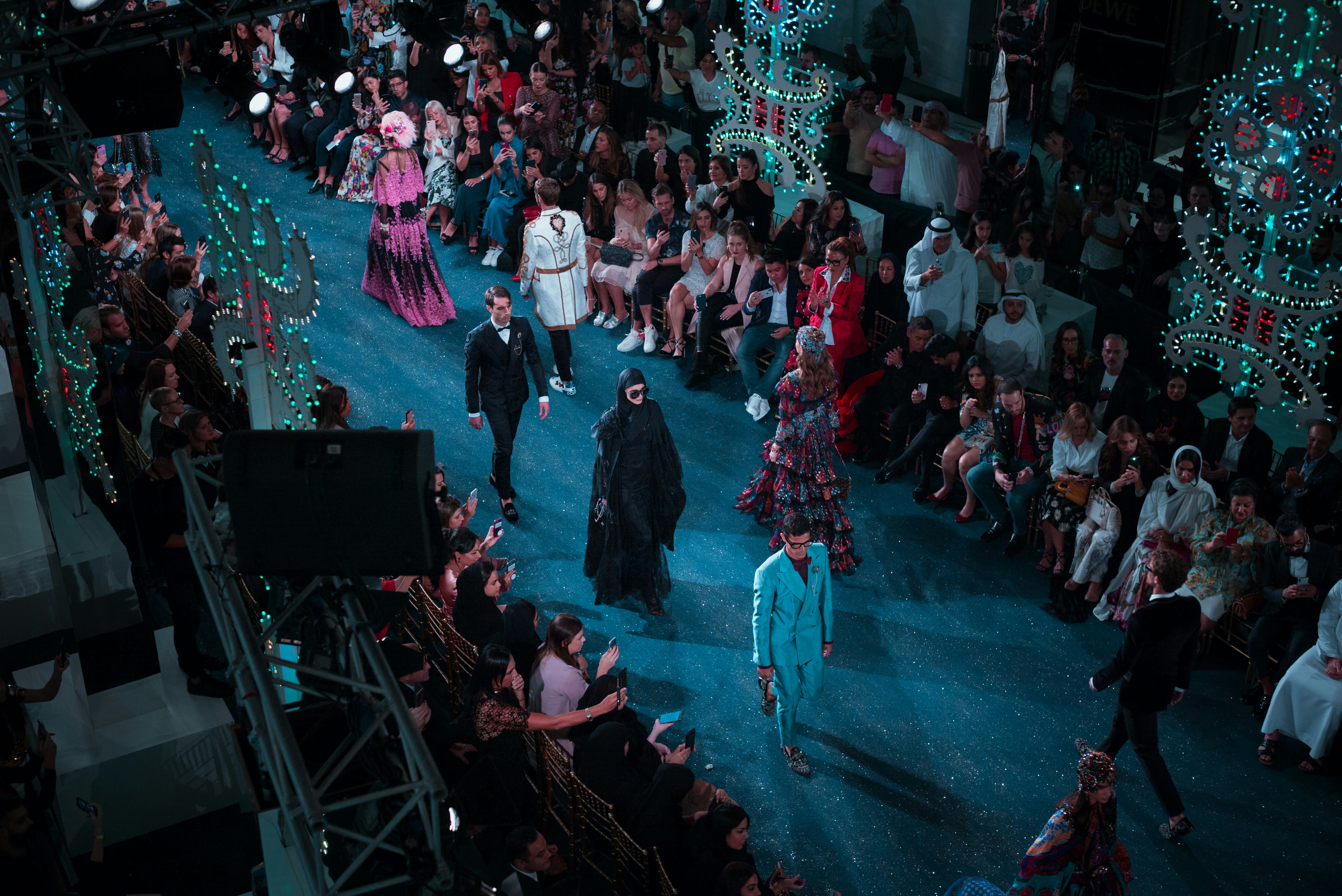
There's a reason Fashion Week is so influential far beyond the fashion industry. It's not about following trends. The event planning industry already has trends. What's truly influential is how fashion shows are produced. The level of control and precision is unparalleled. Clients want that approach to event execution for their events.
1. Visual Direction That Carries the Entire Space
Runway shows rarely try to do too much.
They commit to one strong visual direction and carry it all the way through. There is no hesitation once the direction is set. There is no mid-show adjustment. Everything aligns behind a single idea.
That same approach is starting to show up in client requests. Instead of layering multiple themes into one event, they are asking for one clear concept that feels consistent from entry to exit.
This might be a strict color palette, a repeated material, or a structural element that appears in subtle variations throughout the space. It might show up in the bar design, the stage, the seating, and even the smaller details like menus or signage.
The impact comes from consistency, not variety.
When everything aligns, the event feels intentional. It feels complete. It feels like it was designed, not assembled.
And more importantly, it feels confident.
2. Lighting Builds Anticipation Before it Reveals
Before the first look ever appears, lighting is the star of the fashion show. When attendees arrive, the lighting is bright and welcoming. When the show is about to begin, the lights dim. The change signals to guests that something important is about to happen. Then, as the show begins, the lighting becomes more dynamic and active. The change and movement build anticipation for what's to come.
Clients want to create the same experience for their events. Guests arrive at one lighting scheme. It lets them adjust and settle in. Then, the lighting changes, signaling the start of the event. Throughout the event, the lighting can change to command attention and build anticipation.
3. Seating Layouts Use Runway Viewing Angles
The audience seating is almost as important as the clothing being showcased in the runway show. For many, it's all about where they are placed. The closer they are to the runway, the more prestigious the seat. However, for planners, it's so much more than that. Every seat, whether up front or not, is positioned with intention. No guest should feel disconnected from the show.
Traditional event seating prioritizes capacity. However, that means it sacrifices experience. Those seats positioned far off to the side or far in the back end up with poor sightlines. Guests feel disconnected and ultimately disengage.
This might mean narrowing the layout. It might mean reducing total seating. It might mean rethinking how the room is oriented entirely. The focus shifts from how many people you can fit to how well those people experience the event.
4. Backdrops Act as a Frame
For runway shows, the backdrop is kept simple and clean. It never competes with the show. Clients are following this example by eliminating overly ornate and detailed backdrops. These take away from the entertainment, speakers, or key moments.
5. Defined Pathways Guide Movement Like a Runway
Sure, runways look like stages, but they are so much more than that. They are directional tools for the models and the guests. A clearly defined runway signals to guests where the models will be walking, so they know where to look.
This strategy can be used for client events. Creating clear pathways creates visual signals for guests. That way, they know where to move throughout the venue. Clearly defined pathways reduce hesitation, making the event feel more enjoyable.
6. Editorial Styling Instead of Decorative
Fashion week is a living, breathing editorial spread. Every element used contributes to the narrative. Everything has a purpose and use. Clients want the same elevated look for their events. The event needs a single, cohesive thought and message. Anything unnecessary is removed so there is no filler and clutter.
7. Transitional Moments Feel Like Scene Changes
Runway shows are divided into segments. The structure creates organization. The segments are also perfect opportunities for energy shifts. This generates audience engagement and interest.
Clients don’t want their event to fall flat because it has only one energy level. Dividing the event into segments creates natural transitions where the energy can rise and fall. Guests feel the progression even if they cannot identify what changed.
8. Styling Supports Timing and Pacing
Every minute of every Fashion Week event is scheduled down to the second. That timing is crucial to maintain pacing. Clients are beginning to realize that timing and pacing are about more than having a general guideline. When an event runs long or veers off track, it feels disorganized. They begin to mentally disengage.
9. Elevated Simplicity That Feels Intentional
The highest level of precision and the most coveted runway designs are often the simplest. It’s that simplicity that required precise action. Any little mistake becomes painfully obvious. Clients want to showcase that level of refinement in their events.

Learn More About Event Styling Ideas at The Event Planner Expo
Fashion Week in NYC influences all events because it’s a discipline wrapped in a beautiful package. The tight control behind the scenes sets the stage for a seamless guest experience. Clients are learning from their experiences and expecting the same level of execution at their events.
The planners who recognize this are not recreating runway shows. They are applying the principles behind them. They are happening at The Event Planner Expo 2026, where planners are not just looking at what is trending, but understanding what is changing and why it matters.
The ideas changing the industry are happening here. Get your tickets to The Event Planner Expo 2026.