7 Micro-Event Concepts That Deliver Big Impact Without Big Budgets
Most corporate events that fall flat aren’t underfunded; they’re overbuilt. Too many elements and decisions dilute the experience, even with a strong budget. Micro-events fix that by stripping things back to fewer people, fewer parts, and more intention. In New York, they’re not smaller events; they’re a different approach entirely. They work because every detail is deliberate and every interaction matters.
1. The Single-Idea Salon
Most corporate events try to cover too much. There are overambitious executives and well-meaning administrators who try to pack the schedule with everything they possibly can. It’s our job as event planners to rein them in. We know they have too many speakers booked. There are too many topics on the docket. The intended takeaways have muddied the waters.
What they need is a single idea salon. It takes all of the noise away. One idea. One central conversation. One reason for the room to exist.
Everything is built around a single idea and message. This approach works so well because it fosters depth.
In NYC corporate environments, where attendees are often moving between events, meetings, and obligations, this level of focus feels different. It feels considered.
It also shifts how the event is remembered.
Guests do not leave with a list of disconnected takeaways. They leave with a clear, developed understanding of one idea that was explored thoroughly in the room.
2. The Chef’s Table Experience
Stop treating food like a supporting element or afterthought at your corporate events. At a micro-event, food serves as the supporting structure.
Start with a chef’s table format. Then, build the event experience around it. There’s a shared culinary experience and progression. This isn’t your typical plated dinner in a ballroom. It’s an intimate experience where people eat, laugh, talk, and connect.
The food itself drives pacing, conversation, and engagement. Seat guests so they can engage with one another. There may be visibility into preparation, or direct interaction with the chef or team.
Smaller groups allow for presence. People are close enough to engage without feeling crowded. The pacing creates natural pauses for conversation without forcing it. There is a rhythm to the experience that replaces the need for structured programming.
For corporate clients, this creates a setting where relationships can develop more naturally. Conversations are not rushed. The environment does not compete for attention. It supports it.
The event becomes less about hosting and more about facilitating an experience people would choose to attend on their own.
3. The Walkable Experience
Not every event needs to exist within a single room.
The walkable experience uses the surrounding environment as part of the event design. Instead of one location, the experience is spread across a series of curated stops.
Each location offers a different layer.
A short conversation in one space. A tasting in another. A demonstration or branded moment in the next. Movement becomes part of the structure, not something guests have to initiate themselves.
This works because it changes how the event is perceived.
Time feels segmented instead of continuous. Guests are not sitting or standing in one place for extended periods. They are transitioning, exploring, and re-engaging at each stop.
For corporate clients, this reduces the need for a large, expensive venue while increasing the overall experience.
Instead of building everything from scratch, the event leverages what already exists and curates it intentionally.
4. The Micro-Workshop Series
The micro-workshop format shifts away from the traditional workshop format. They aren’t meant for scale. They are meant for interaction.
Sessions are smaller. More focused. Designed for participation rather than observation. Instead of one large group, multiple sessions run in sequence or rotation, each with limited capacity.
Guests can attend one or move between several, depending on interest.
This creates a different dynamic.
Participants are more likely to engage in smaller groups. Questions are asked. Ideas are exchanged. The experience feels tailored instead of generalized.
From an execution standpoint, this also allows for more flexibility. Content can be adjusted between sessions. Facilitators can respond to the energy of the group. The event becomes more adaptive.
In NYC corporate environments, where attendees are often selective about how they spend their time, this format delivers immediate value.
5. The Invitation-Only Showcase
The invitation-only showcase is built around a highly specific guest list. These guests are meant to be highly interested in a tightly defined objective. Whether it is a product reveal, a brand introduction, or a relationship-building event, every element is aligned with that purpose.
The guest list is curated, not expanded. The environment is controlled. The experience is direct.
This works because it removes noise.
There are no unnecessary layers competing for attention. Guests understand why they are there. The experience feels intentional from the moment they arrive.
It signals that attendance is considered, not assumed.
For corporate clients, this format often delivers stronger results than larger events. Conversations are more meaningful. Engagement is higher. The experience feels aligned with the audience rather than built for visibility.
6. The Conversation Grid
Networking is often left unstructured or over-structured, and both approaches create friction.
The conversation grid introduces a middle ground.
The space is divided into zones based on themes, industries, or discussion points. Guests move between zones based on interest. There is no rigid schedule, but there is enough structure to guide behavior.
This removes the initial hesitation that often comes with open networking.
Guests know where to go. They know what kind of conversation to expect. But they are not being directed in a way that feels forced.
In a micro-event setting, this creates a high density of relevant interaction in a shorter period of time.
From a design perspective, the environment supports this movement. Zones are visually distinct but connected. Transitions are natural. There are no dead spaces.
In NYC venues where space can be limited or segmented, this approach works with the layout instead of trying to override it.
For corporate clients, this results in more meaningful connections without needing to increase the number of attendees.
7. The Live Build Concept
Most corporate events present finished ideas.
The live build concept focuses on process.
Something is created in real time within the event environment. This could be a design concept, a strategic framework, a product iteration, or even a collaborative output shaped by guest input.
The key is visibility.
Guests are not just seeing the outcome. They are watching it develop. They are engaging with the process as it happens.
This creates a different kind of attention.
People gather naturally. They stay longer. They return to see progress. Conversations form around what is unfolding in front of them.
In a micro-event setting, this becomes even more effective. Smaller groups allow for better visibility and more direct interaction. The experience feels immediate.
For corporate clients, this builds transparency and trust. It positions the brand as active and evolving, not static.
In New York, where audiences are highly aware of overproduced environments, this approach feels more authentic. It aligns with how people want to engage with ideas now.

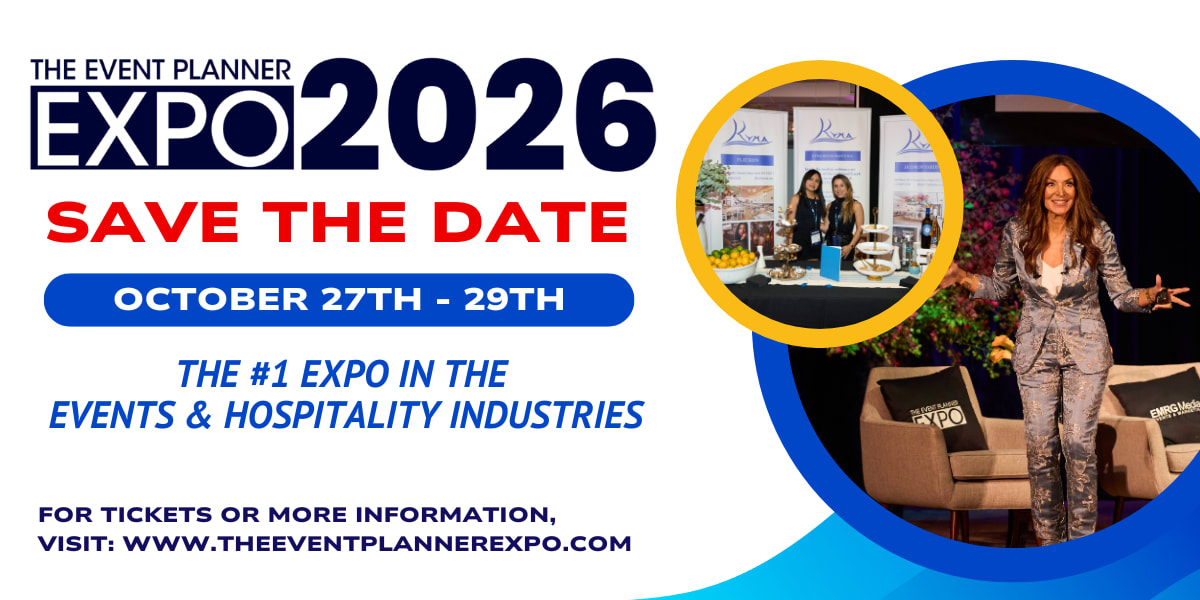
Learn More About Micro-Event Concepts at The Event Planner Expo
Micro-events aren’t about doing less, they’re about removing what doesn’t add to the experience. With fewer people, less space, and more intentional design, clarity increases and interactions become more meaningful. Impact comes from focus, not size. That shift is exactly what’s being explored at The Event Planner Expo 2026, where planners are using constraints to build more intentional corporate events that deliver value without relying on scale.
Reserve your booth and position your brand at the center of the conversation.