10 Event Trends NYC Planners Are Seeing Across Corporate and Social Events
At some point, corporate and social events stopped pretending to be different. Yes, their goals and guest lists are different. But the way NYC event planners think about bringing them to life is the same. Flow, space, and experience are just as important. Corporate events are losing their stiffness. Social events are looking to tame the chaos. These quiet shifts are showing up in how people arrive and how event rooms function.
1. Events Are Trying Not to Feel Like a Template
There’s a growing resistance to events that feel like they could’ve happened anywhere, for anyone, at any time. You know the kind. (And you probably aim to never produce events like this.) Same layout, same pacing, same menu progression, same welcome cocktail with a clever name that no one remembers past the first sip.
Guests don’t usually articulate this directly, but they can sense when an event is running on autopilot. It shows up in the way people disengage early or treat the event as something to get through rather than something to be part of.
Planners are responding by making small, deliberate choices that suggest the event was built for this group. Music that actually fits the crowd instead of defaulting to safe background noise. Food that reflects who’s in the room rather than what was easiest to execute. Design decisions that don’t look like they were lifted straight from the venue’s marketing materials.
It’s less about personalization as a buzzword and more about avoiding that hollow, generic feeling guests are increasingly allergic to.
2. Layouts Are Being Designed for How People Move, Not How They’re Supposed to Sit
One of the clearest shifts across both corporate and social events is the attention paid to movement. People are far less willing to stay in one place for long stretches, especially if the space doesn’t give them options.
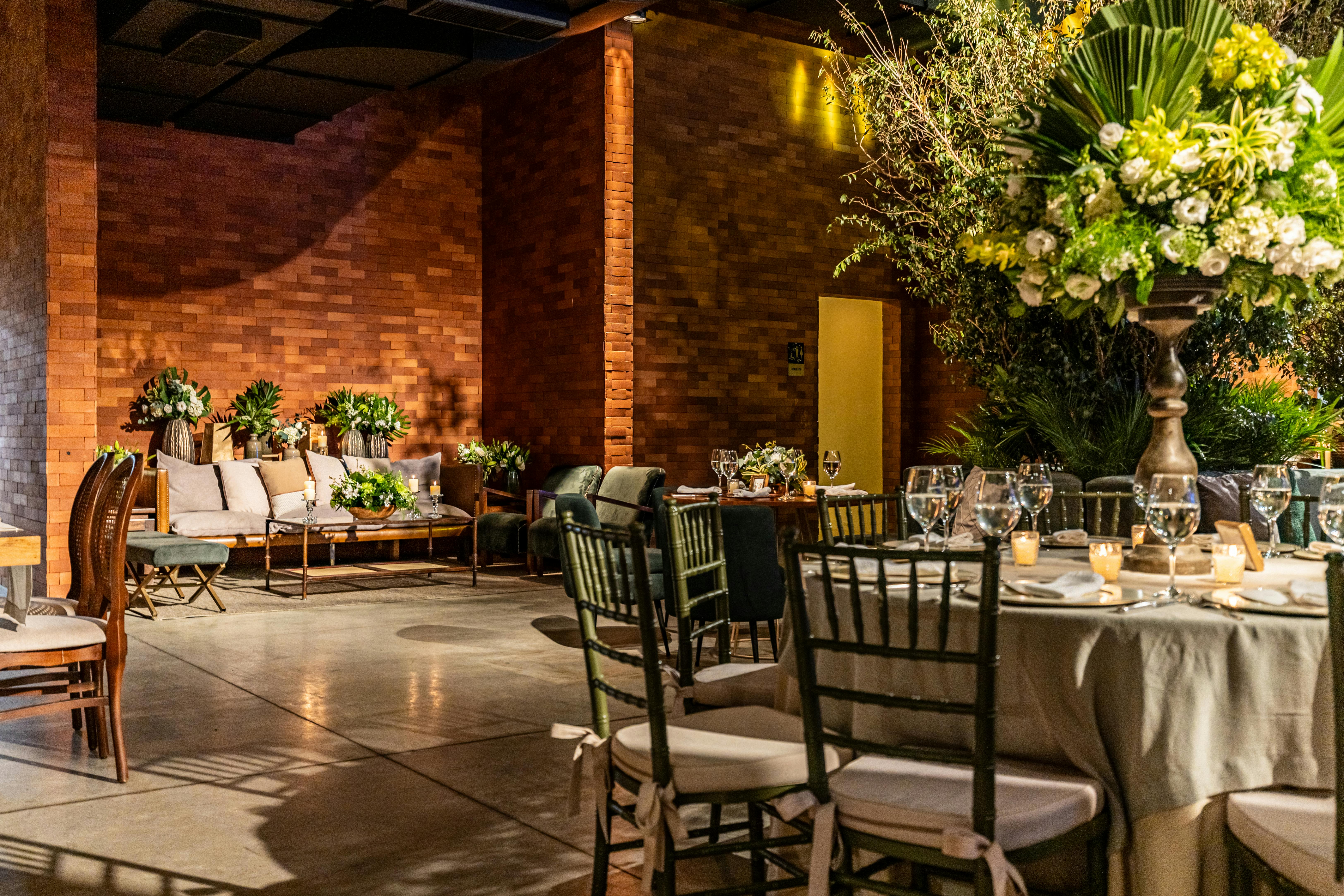
Planners are loosening layouts so guests can circulate naturally without feeling as if they’re breaking an unspoken rule. That means fewer rigid seating plans and more open pathways, clearer circulation, and intentional pauses built into the room.
You see this at networking-heavy corporate events, as well as at weddings, fundraisers, and celebrations where guests don’t want to be stuck at one table all night. When people can move freely, the energy stays up longer. When they can’t, the room starts to feel heavy, and you can feel the momentum drop.
3. Food Is Being Used to Support Momentum Instead of Stopping the Event Cold
The old way of doing things treated food like a separate part of the event. Everything else stops while event guests sit down to eat. It creates a strong halt and a disjointed experience. NYC event planners have learned that if you stop the event for a heavy meal, you can never regain the energy.
That’s why NYC event planners are taking a new approach. Say goodbye to the big, heavy meals. In its place, they are serving smaller plates, interactive stations, and passed-around bites. These are smaller moments integrated into the rest of the event.
The result is an event flow that continues, with guests able to keep conversing and moving.
4. Fewer Decorative Elements, Bigger Design Decisions
The current trend is to create an immersive event by filling the venue space with an overwhelming amount of decor. Every square inch has something to look at. Innovative planners are branching out with a new approach.
Instead of going with more, they are scaling back. They are selecting a few pieces of strong and impactful decor. These elements do the work without the space feeling crowded.
5. Lighting Is Carrying Emotional Weight, Not Just Visibility
NYC event planners are turning lighting into a key design element. They aren’t setting it and forgetting it. Instead, they are working with top NYC lighting vendors to craft a lighting design.
Over the course of the evening, the lighting guides the energy of the evening. Event arrival is bright and hopeful. It’s perfect for making people feel comfortable connecting and settling in.
As the event gets underway, the lighting should change to complement the energy of the room. Towards the end of the evening, the lighting becomes warmer and softer. It’s a subtle change of pace.
6. Programming Is Being Edited with a Much Sharper Eye
Long programs are getting trimmed, not because content isn’t valuable, but because people have less patience for anything that feels indulgent or unfocused. Planners are pushing speakers to be clearer and more concise, not out of cruelty, but because they’ve watched too many rooms empty halfway through a segment.
Panels are being tightened up as well, with more moderation and clearer goals, since wandering conversations tend to lose energy quickly. Even toasts, particularly in social settings, are being given more structure or limits, because everyone has seen how fast a room can turn once a microphone lingers too long.
The underlying shift is toward respecting attention spans without eliminating meaningful moments entirely.
7. Branding and Storytelling Are More Integrated
Branding fatigue is real. People are tired of being bombarded by loud and overly aggressive logos everywhere they turn. The problem is that when this happens, people start to go blind to the branding. They may see it, but their brain processes it out, so they don’t retain it. NYC event planners are accounting for this by taking a new approach to event branding.
When messaging feels integrated, guests absorb it more naturally and with far less resistance. Top event planners are artfully weaving branding and storytelling into the environment.
8. Comfort Is a Design Requirement, Not a Bonus
Experienced NYC event planners have seen firsthand how guest discomfort can cast a cloud over everything else. Comfort used to be an afterthought behind event design. That is no longer the case.
It doesn’t matter how pretty the venue space is. When you don’t have these, your guests will be looking for the exit. Improving lighting, seating, sound, and temperature encourages guests to stay longer.
9. Events Are Designed for How People Actually Behave
Events are meant for people to participate in and enjoy. So they should be designed with how humans actually behave. Real human behavior is often different from idealized scenarios. You’d love for everyone to arrive early or on time and be attentive and ready when your event starts. That’s not reality. People arrive late. People arrive distracted. They leave early. They step away during the event to take calls.
While you can’t accommodate everyone or account for every scenario, you can design an event that is compatible with human behavior. Design a schedule that has more flexible pacing. Add clear event re-entry pathways.
10. Cohesion Takes Priority Over Isolated “Wow” Moments
Stop relying on your dramatic “wow” moment to carry the entire event. NYC event planners are expected to be skilled enough to plan the entire event without relying on tricks. This is leading planners to take a hard look at all of the elements. Do they make sense together from start to finish?
Does the plan feel intentional? Does the entire event feel cohesive? Guests won’t remember all of the details, but they will remember their overall response and feel. If the event feels disjointed, guests will notice.

Learn More About Event Trends at The Event Planner Expo 2026
Flow matters. Comfort matters. Intentionality matters. Respect for human behavior matters. Planners who pay attention to these overlaps build events that feel less performative and more functional.
If you want to see how these trends are actually showing up in real NYC event environments, The Event Planner Expo is one of the few places where corporate and social worlds genuinely intersect. It’s where planners compare notes, vendors show what’s holding up in practice, and patterns become clearer once you see them in person.
Lock in your booth today and join thousands of event professionals at The Event Planner Expos.