The Bare Necessities: What Every Basic Event Sponsorship Package Needs
Why Every Event Organizer Needs a Solid Sponsorship Foundation

A basic event sponsorship package is a structured proposal that outlines the specific benefits and opportunities sponsors receive in exchange for their financial or in-kind support. At its core, it includes:
- Event and organization overview (mission, date, location, past success)
- Detailed audience demographics (size, industries, job titles, interests)
- Clear sponsor benefits (logo placement, social media exposure, booth space, networking access)
- Sponsorship tiers or customizable options (pricing levels like Gold/Silver/Bronze)
- Marketing and promotional strategy (how sponsors will be featured)
- ROI metrics and reporting (how success will be measured)
If you have ever scrambled to toss together last-minute perks for sponsors, know that plenty of organizers face the same rush. But here’s the reality: events help companies stand out from the competition for 84% of marketers, and sponsors are a key revenue stream, with 65% of organizers accepting them to fund their gatherings. Plus, the sponsorship segment grows at a projected 12.1% CAGR through 2028, underscoring its rising importance. Without sponsors, most events simply can’t happen.
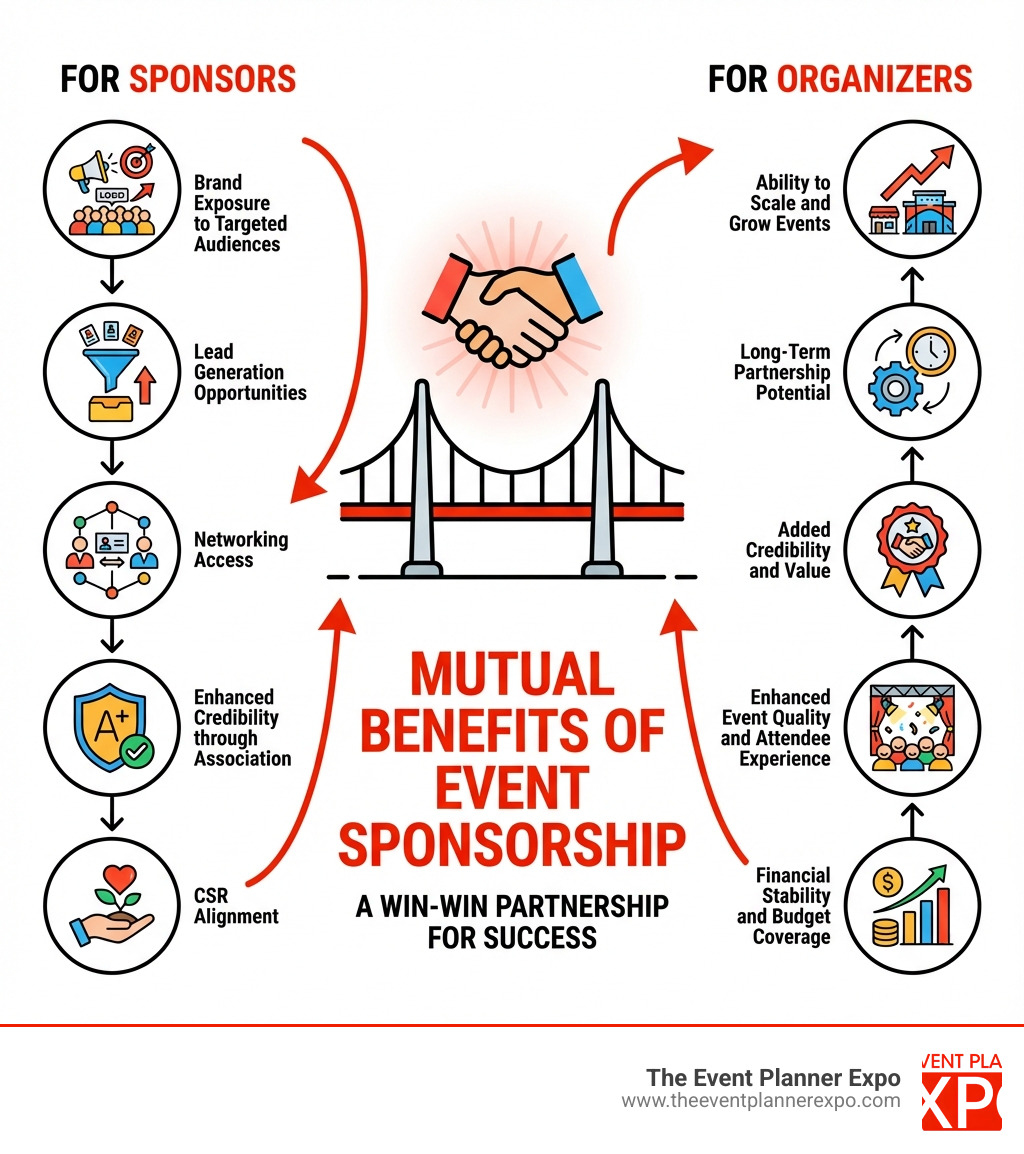
The good news? Creating a professional sponsorship package doesn’t have to be complicated. When done right, it’s a win-win: sponsors gain targeted brand exposure and meaningful connections, while you secure the funding needed to deliver an exceptional attendee experience.
I’m Jessica Stewart, and as Vice President of Marketing & Sales at The Event Planner Expo, I’ve spent over a decade crafting basic event sponsorship packages that have attracted companies like Google, JP Morgan, and Estée Lauder to become partners. The key is understanding that a sponsorship package isn’t just a request for money—it’s a professional sales pitch that demonstrates clear, mutual value.
Get the Basics Right: What Makes Sponsorship Packages Essential
At The Event Planner Expo, we get that landing sponsors can feel intense in event planning. But when we approach it with a clear understanding, it becomes an exciting opportunity for mutual growth. So, what exactly is a basic event sponsorship package, and why is it so incredibly important for event organizers like us?
Picture a sponsorship package as your event’s powerhouse pitch, a sleek document designed to hook potential backers. It’s more than just a list of demands; it’s a dynamic partnership agreement that outlines the specific value exchange between our event and a sponsor. We’re showing them what they’ll gain—be it branding opportunities, speaker slots, or direct access to our audience—and what we, in turn, receive from them, whether it’s monetary support, services, or in-kind donations.
The power of this package stands out strong. Event sponsors are a core part of any successful trade show, and they are crucial to our financial stability. They help us cover costs and increase our event’s return on investment (ROI). With sponsorship dominating event revenue shares through 2035, securing backers lets us fuel bigger visions. Sponsors literally help us fund our events and allow us to dream bigger.
Beyond the financial aspect, sponsorships improve our event’s credibility and add significant value. When reputable companies align with our events, it boosts our standing in the industry. This collaboration also allows us to offer better experiences for our attendees, from engaging speakers to exciting new technologies and exclusive networking opportunities. A well-executed sponsorship strategy helps us build lasting partnerships that can lead to long-term support and growth. As we see it, event sponsorship isn’t just about getting through one event; it’s about driving business growth and event success for years to come. It’s a true win-win scenario, where everyone involved—our organization, attendees, and sponsors—benefits.
Building Your Basic Event Sponsorship Package: The Essential Components
Creating a basic event sponsorship package requires a thoughtful approach, ensuring every element speaks to professionalism, clarity, and a compelling value proposition. It’s not just about listing what we want; it’s about showcasing what we offer.

Information About Your Event & Organization
First impressions matter, and our sponsorship package is often the first interaction a potential sponsor has with our event. We start by clearly articulating who we are, what our event is about, and why it matters. This includes:
- Our mission and vision: What drives The Event Planner Expo? What impact do we aim to make in the event, marketing, and hospitality industries?
- Event purpose and theme: What are the core objectives of this specific event? (e.g., connecting professionals, showcasing innovations, fostering business growth).
- Date and location: For us, this means highlighting our three-day gathering in New York City, a prime hub for business and innovation.
- Schedule highlights: What are the key attractions? Is it a speaker series, a busy trade show floor, or unique networking events?
- Past successes: We always include data and testimonials from previous successful events, showcasing our track record and the caliber of our attendees and past sponsors. This builds trust and demonstrates our proven ability to deliver value.
- Unique selling points: What makes our event stand out? Is it our exclusive network, our innovative content, or our prime locations in Manhattan, Tribeca, or Times Square?
Detailed Audience Demographics
Sponsors are looking for connections with attendees and opportunities for maximum brand exposure. To truly sell our event, we need to provide a crystal-clear picture of who our audience is. This isn’t just about numbers; it’s about quality and relevance. Our basic event sponsorship package digs into:
- Who attends: Are they event planners, marketing executives, hospitality professionals, or business owners?
- Expected attendance numbers: For The Event Planner Expo, we highlight our thousands of attendees annually.
- Job titles and industries: Providing a breakdown of roles and sectors helps sponsors see the direct alignment with their target market.
- Geographic data: We focus on our strong presence in the New York Metropolitan Area, including New York City, New Jersey, and Connecticut, but also our global reach for virtual components.
- Attendee interests: What are our attendees passionate about? What challenges are they looking to solve? This helps sponsors tailor their message.
By providing these detailed insights, we’re not just proving audience alignment; we’re giving sponsors the confidence that their investment will reach the right people.
The Core of Your Basic Event Sponsorship Package: Sponsor Benefits
This is where we clearly outline what sponsors will receive in exchange for their support. The benefits should be tangible, valuable, and directly address what sponsors look for in a partnership. Industry data shows 81% of corporate leaders view sponsorships as delivering moderate to significant business value, making these perks a smart sell.
- Brand Exposure: This is often at the top of a sponsor’s list. We offer various opportunities for increased visibility, ensuring their brand is seen by our targeted audience before, during, and after the event.
- Lead Generation: Sponsors want to connect with potential customers. Our packages include ways for them to gather leads, whether through dedicated booth space, sponsored content, or interactive sessions.
- Networking Opportunities: Facilitating direct connections between sponsors and our attendees is crucial. We offer exclusive access to VIP lounges, networking receptions, and one-on-one meeting opportunities.
- Corporate Social Responsibility: Many companies are actively seeking opportunities to align their brands with CSR initiatives. We highlight how sponsoring our event can strengthen their brand image and show commitment to the industry, as corporate philanthropy trends show growing partnerships between companies and nonprofits in 2025.
Here are key benefits we pack into our basic event sponsorship package to drive real results:
- Logo placement on event websites, apps, and marketing materials
- Social media mentions and dedicated posts
- Prominent booth space on the trade show floor
- Inclusion in event programs and directories
- Verbal recognition during opening/closing remarks and key sessions
- Opportunity to distribute branded merchandise or collateral
- Access to attendee lists (with consent)
- Speaking opportunities or participation in panel discussions
- Pre- and post-event email marketing inclusion
Structuring and Pricing Your Packages for Success
Once we’ve identified the essential components, the next step for our basic event sponsorship package is to structure and price it effectively. The goal is to offer flexibility, cater to different budgets, and create a sense of urgency without being pushy. On average, sponsorships account for 12% of a brand’s marketing budget, so positioning your packages as high-value investments pays off.
Choosing Your Sponsorship Model
We generally employ a combination of models to appeal to a wide range of potential sponsors.
| Feature | Tiered Sponsorship Model | Customizable (A La Carte) Sponsorship Model |
|---|---|---|
| Structure | Pre-defined levels (e.g., Platinum, Gold, Silver) | Individual benefits chosen from a menu |
| Benefits | Increasing value with higher tiers | Custom to specific sponsor goals |
| Target | Broad range of budgets and objectives | Sponsors with unique needs or larger investments |
| Simplicity | Easier for sponsors to understand and choose | Requires more discussion and personalization |
| Example | Gold tier includes booth, logo, social mentions | Sponsor chooses “keynote speaker intro” + “app banner ad” |
The tiered model is a classic for a reason. Common sponsorship tier labels include Platinum, Gold, Silver, and Exhibitor. This approach allows us to attract a wide range of sponsors, from smaller businesses looking for basic brand exposure to major corporations seeking high-level engagement. Higher tiers offer more perks, making it clear what additional value comes with a larger investment. For instance, it’s common to see tiered packages with escalating benefits and price points that reflect the increased value.
However, we also understand that some sponsors have very specific goals. That’s where customizable options, or an a la carte model, come into play. This allows sponsors to pick and choose individual benefits that best align with their marketing objectives, rather than paying for a pre-set package that might include unwanted elements. Often, we use a hybrid approach, offering tiered packages as a baseline, with a la carte add-ons for sponsors who want to further tailor their experience.
How to Price Your Basic Event Sponsorship Package
Pricing our basic event sponsorship package is both an art and a science. We need to accurately quantify the value we offer, conduct thorough market research, and understand our audience’s worth.
- Quantifying value: We assess the visibility, reach, and engagement opportunities our event provides. How many impressions will a logo get? How many leads can a sponsor expect? What’s the potential for direct sales or brand lift?
- Market research: We look at what similar events in New York, Boston, or even London are charging for their sponsorship packages. This helps us set a competitive yet fair baseline.
- Audience value: Our audience—event, marketing, and hospitality professionals—is highly targeted and valuable. We leverage our detailed audience demographics to justify our pricing, demonstrating to sponsors that they are reaching decision-makers with purchasing power.
- Tangible vs. intangible benefits: We consider both. Tangible benefits are easy to measure (e.g., booth size, ad impressions). Intangible benefits, like association with The Event Planner Expo’s reputable brand or aligning with our CSR initiatives, also hold significant value.
- Starting with a basic tier: Our entry-level basic event sponsorship package must still offer compelling benefits. Even at the lowest tier, sponsors should feel they are getting good value, such as easy setup, promotion of their exhibitor resource center, or emphasis on our audience’s spending power.
- Key assets sponsors value: We prioritize direct attendee access, visibility, and leads in our packages, ensuring fair pricing across tiers. Discover more at The Event Planner Expo by checking our sponsorship options.
From Proposal to Partnership: Pitching, Proving ROI, and Leveraging Tech
Once we have carefully crafted our basic event sponsorship package, the real work begins: turning a proposal into a thriving partnership. This involves strategic pitching, demonstrating clear return on investment, and leveraging cutting-edge event technology. With 74% of event marketers expecting their budgets to grow in 2025, now is the time to pitch boldly.
Finding and Approaching Potential Sponsors
Finding the right sponsors feels like striking gold – it’s all about perfect alignment. We do not just send out mass emails; we carefully research and identify brands that resonate with our event’s theme, audience, and values. For The Event Planner Expo, this means targeting companies that want to connect with event, marketing, and hospitality professionals in the New York Metropolitan Area and beyond.
- Researching aligned brands: We look for companies whose target audience mirrors ours. If we are organizing an event on sustainable practices, we would approach eco-friendly brands. For our expo, we seek out innovative tech providers, leading catering companies, and top-tier venues.
- Reviewing sponsors from related events: We observe who sponsors similar industry events, both in our regions like New Jersey, Connecticut, and Philadelphia, and globally. This gives us a good starting point for outreach.
- Personalizing outreach: A generic email rarely works. We customize our messages to each potential sponsor, referencing their products, recent campaigns, or how their goals align with our event. This shows we have done our homework and value their specific interests. Emails are a standard outreach method for a number of reasons, such as the ability to send them in bulk, communicate instantly, and customize the content to your needs.
- Crafting a compelling pitch deck: Our sponsorship deck, or packet, is a presentation that highlights the benefits sponsors will receive. It includes our event vision, target market, proposed benefits, and pricing. It is designed to generate excitement and tell our organization’s story, not just list data.
- Tips for effective sponsorship letters and outreach: A strong sponsorship letter complements the package. We ensure it is concise, clear, and includes a strong call to action. Bloomerang’s guide to sponsorship letters offers advice on this.
- Strategies for attracting and retaining event sponsors: Building long-term relationships is key. We focus on providing value and service from the first contact, aiming for partnerships that extend beyond a single event. For more in-depth strategies, refer to our article on “Strategies for Attracting and Retaining Event Sponsors in 2024.”
The Role of Event Tech and Demonstrating ROI
Event technology has changed how we create and deliver sponsorship benefits, particularly for our hybrid and virtual components. It allows us to offer sponsors ways to engage with attendees and provides us with data to demonstrate their return on investment. For instance, 87% of large trade show organizers choose platforms with virtual sponsorship booths to maximize reach.
- Event apps: Our event app becomes a platform for sponsors. They can send push notifications to attendees, be easily found via a showroom floor map, and promote their products and services through banner ads and splash pages.
- Virtual booths: For hybrid or virtual events, interactive virtual booths allow sponsors to showcase products, host live Q&A sessions, and capture leads digitally.
- Lead capture tools: Integrated tools help sponsors collect valuable attendee data and follow up effectively.
- Push notifications: Sponsors can send targeted alerts about their sessions, product launches, or special offers directly to attendees’ devices.
- Post-event analytics: This is crucial for demonstrating ROI. We provide sponsors with reports on their visibility, engagement rates, lead generation, and overall impact.
- Showing return on investment (ROI): When organizations look into sponsoring us, their choice often comes down to ROI. We gather data on impressions, clicks, lead conversions, and attendee feedback to create sponsorship recap reports. These reports outline the sponsor’s involvement and their ROI, providing feedback and outlining ideas for future engagement.
- Sponsorship recap reports: These reports are vital. They do not just summarize; they analyze and present the sponsor’s value in a clear way. To master reports that drive renewals, explore guides like those from Bloomerang.
Examples of Successful Sponsorship Packages
Learning from the successes of other major industry events can provide insights. Top-tier events, whether focused on tech, marketing, or finance, often showcase their sponsorship opportunities with clarity and professionalism. They provide clear add-ons, detailed benefits, inclusions, and prices on their sponsorship pages, often including demographic data to target potential sponsors effectively. Some take a different approach by reviewing sponsors’ areas of expertise rather than displaying rigid packages, fostering a more collaborative partnership.
What can we learn from these examples for our basic event sponsorship package?
- Clear value proposition: Each successful package clearly explains what the sponsor gains.
- Strong branding: The sponsorship materials themselves are designed and reflect the event’s quality.
- Detailed demographics: Providing data on the audience is a recurring theme, as it directly addresses a sponsor’s need for targeted reach.
- Flexibility and customization: While tiers are common, the ability to tailor offerings for larger sponsors is often a differentiator.
- Leveraging technology: Many successful events integrate sponsors into their digital platforms, apps, and virtual experiences.
At The Event Planner Expo, we embody these principles, crafting packages that resonate with brands looking to connect with our community of event, marketing, and hospitality professionals.
Frequently Asked Questions about Basic Event Sponsorship Packages
We often get asked common questions about creating and managing sponsorship packages. Here are some of the most frequent inquiries and our expert answers.
What is the difference between a sponsor and a partner?
While often used interchangeably, there’s a subtle but important distinction. A sponsor typically enters into a more transactional relationship: they provide financial or in-kind support in exchange for defined promotional benefits and brand exposure. It’s a clear exchange of value.
A partner, on the other hand, often implies a deeper, more collaborative relationship built on shared goals and mutual objectives. Partners might be involved in co-creating content, co-hosting events, or engaging in long-term strategic alliances that go beyond simple logo placement. While sponsors are crucial, partners are often seen as integral to the event’s overall success and vision, fostering a true win-win scenario.
How many tiers should a basic sponsorship package have?
For a basic event sponsorship package, we recommend offering typically 3-4 tiers. Common labels include Bronze, Silver, Gold, and sometimes a Platinum or Presenting tier. This range prevents “choice paralysis” (too many options can overwhelm potential sponsors) while still offering enough flexibility to cater to different budgets and desired levels of engagement.
- Bronze/Entry-Level: Offers fundamental brand exposure (logo on website, program mention, small booth).
- Silver/Mid-Level: Includes more prominent branding, perhaps a larger booth, social media shout-outs, or a speaking opportunity.
- Gold/High-Level: Provides premium visibility, keynote speaking slots, VIP access, dedicated marketing, and significant lead generation opportunities.
Each tier should clearly articulate increasing value and benefits as the investment grows.
Should I include pricing directly in my sponsorship package?
Yes, for basic and mid-level tiers, include pricing right in your sponsorship package for full transparency. This approach offers transparency and allows potential sponsors to immediately assess if the package aligns with their budget. It also streamlines the decision-making process for them.
However, for very high-level, exclusive, or custom packages (like a Presenting or Title Sponsorship), it’s perfectly acceptable, and often preferable, to state “Contact us for pricing” or “Custom package available upon request.” This encourages a direct conversation, allowing us to tailor the offerings and pricing to their specific goals and maximize the value for both parties. For The Event Planner Expo’s most exclusive opportunities, a direct conversation ensures we can craft a truly bespoke partnership.
Level Up Your Events: Partner with The Event Planner Expo Today
If you want to plan events that feel current, confident, and commercially smart, you need more than inspiration. You need access.
Get your tickets locked in now to The Event Planner Expo and learn directly from the people driving NYC’s event scene forward.