Unlock Success: Create Virtual Event Sponsorship Packages Too Good to Pass Up
Why Virtual Event Sponsorship Packages Are Your Secret Weapon for Event Revenue

A virtual event sponsorship package is a structured collection of marketing benefits and branding opportunities that event organizers offer to companies in exchange for financial or in-kind support. These packages typically include digital assets like logo placements, sponsored sessions, virtual booth space, email marketing inclusion, and data insights—all designed to help sponsors reach their target audience while helping you fund and improve your event.
Key Components of an Effective Virtual Event Sponsorship Package:
- Clear Sponsorship Tiers – Bronze, Silver, Gold, or Platinum levels with escalating benefits
- Audience Demographics – Detailed attendee data showing reach and relevance
- Digital Brand Visibility – Logo placements, banner ads, sponsored content
- Engagement Opportunities – Virtual booths, sponsored sessions, networking rooms
- Lead Generation Tools – Attendee data access, chat features, downloadable content
- ROI Metrics – Clear measurement tools for impressions, clicks, and conversions
- Customization Options – À la carte add-ons for sponsor-specific goals
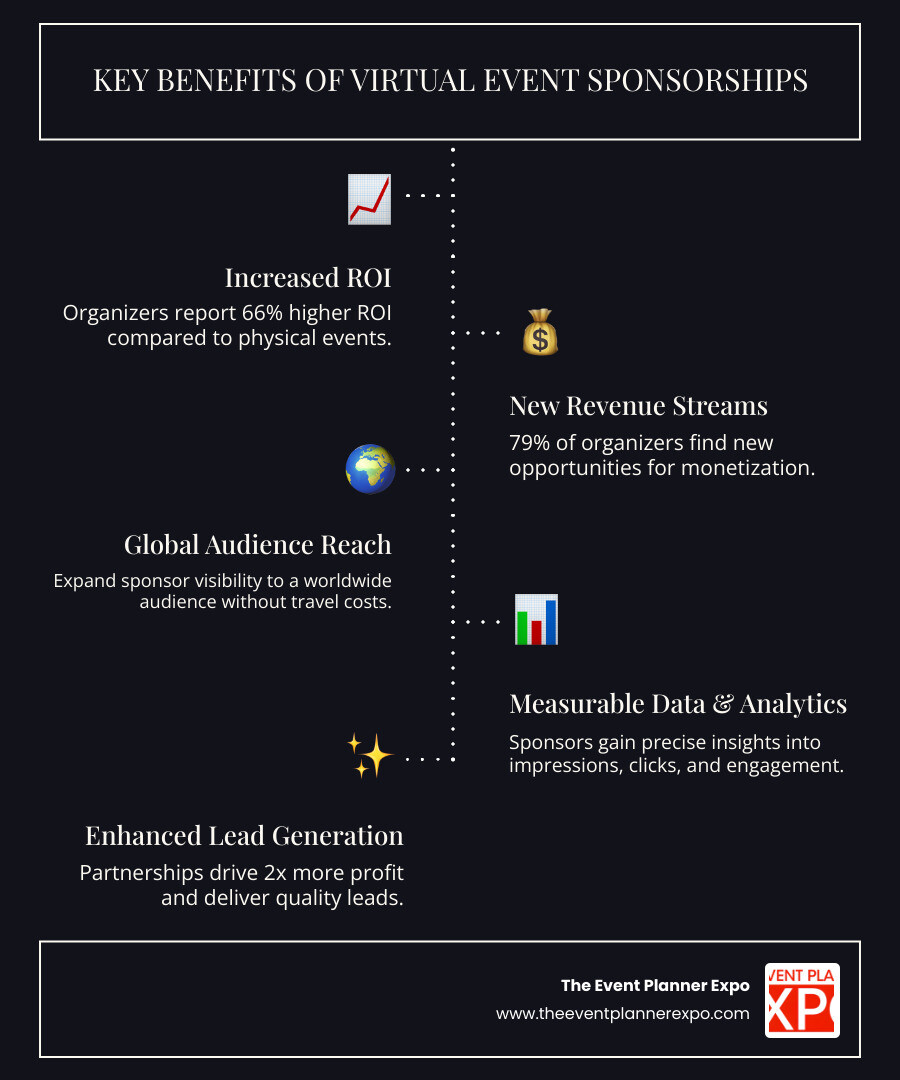
The shift to virtual and hybrid events has fundamentally changed how we think about sponsorships. According to a recent Linkedin survey, 79% of event organizers state that virtual events have spurred new opportunities for their organization, while 66% have seen a boost in ROI compared to physical events. This isn’t just about replacing what we lost when in-person events went virtual—it’s about finding entirely new revenue streams that didn’t exist before.
Virtual events offer something traditional conferences never could: real-time data, global reach without travel costs, and sponsorship opportunities that extend far beyond a banner in the lobby. Sponsors can now track exactly how many people visited their virtual booth, downloaded their white paper, or engaged with their brand. That measurability is pure gold for companies trying to justify their marketing spend.
But here’s the challenge: sponsorships should contribute around 50% of your overall fundraising goal, yet many event organizers struggle to translate traditional sponsorship models into the digital space. The rules have changed. A logo on a stage backdrop doesn’t carry the same weight as a branded breakout room where attendees actually spend time. Growing brands are three times more likely to use partnerships like sponsorships in their marketing strategy and see two times more profit than those who don’t—so the opportunity is massive for both sides.
I’m Jessica Stewart, Vice President of Marketing & Sales for The Event Planner Expo, where I’ve spent over a decade helping transform how event professionals approach sponsorship, including developing innovative virtual event sponsorship package strategies that have attracted companies like Google, JP Morgan, and Estee Lauder. Through my work with thousands of event planners and sponsors, I’ve seen what makes the difference between packages that sit on the shelf and ones that sell out in days.
Building the Foundation: Structuring and Pricing Your Packages
Crafting a compelling virtual event sponsorship package begins with understanding what your potential sponsors truly want. It’s not just about getting their logo out there; it’s about helping them achieve their business objectives. Do they need lead generation? Brand awareness? Or are they looking to improve their Corporate Social Responsibility (CSR) profile by aligning with a cause?
We need to dive deep into their goals, just as they will scrutinize your event’s audience demographics. Sponsors are looking for a value match, where their target audience aligns perfectly with your attendees. This means presenting clear data on who attends your events—their industry, role, location (New York City, London, etc.), and interests. Our insights at The Event Planner Expo consistently show that sponsors are looking for tangible returns. You can learn more about What Event Sponsors Want: Insights from The Event Planner Expo directly from our experience.

| Sponsorship Structure | Description | Pros | Cons |
|---|---|---|---|
| Tiered Model | Packages categorized into levels (e.g., Bronze, Silver, Gold) with escalating benefits and prices. | Clear value progression, caters to different budgets, easier for sponsors to choose. | Can feel less personalized, some benefits might not perfectly align with all sponsors. |
| À la Carte Model | Sponsors select individual benefits from a menu to build their own custom package. | Highly customizable, allows sponsors to pay only for what they need, great for niche goals. | More complex to manage, pricing can be tricky, may require more negotiation. |
| Hybrid Model | Combines tiered packages with à la carte add-ons or customization options. | Offers structure with flexibility, maximizes appeal, can secure higher-value sponsorships. | Requires careful planning to avoid overlap or confusion. |
Key Components of a Compelling Virtual Event Sponsorship Package
Think of your virtual event sponsorship package as your event’s resume and value proposition all rolled into one. It needs to be clear, visually appealing, and utterly convincing. Here’s what we always include:
- Organization Overview & Mission Statement: Briefly introduce your organization, its mission, and your history. What impact do you make? For us at The Event Planner Expo, it’s about connecting event, marketing, and hospitality professionals across New York City and beyond.
- Event Details: Provide a concise overview of the virtual event itself—its theme, dates, format, and what makes it unique. Is it a multi-day conference, a series of webinars, or an interactive expo?
- Audience Data: This is gold! Showcase detailed demographics of your expected attendees: their professional roles, industries, company sizes, and geographic locations (e.g., our extensive network across the New York Metropolitan Area, New Jersey, and even global attendees). Quantify your reach with past registration numbers, social media following, and email list size.
- Sponsorship Levels & Clear Benefits: Outline your tiered packages (Bronze, Silver, Gold, Platinum) with a comprehensive list of benefits for each. Be specific. Instead of “brand exposure,” say “logo prominently displayed on all event pages, pre-roll video ad before keynote sessions, and dedicated virtual booth.”
- Call to Action: Make it easy for potential sponsors to take the next step. Include contact information and a clear instruction on how to proceed.
- Compelling Visuals: A picture is worth a thousand words. Use professional design and visuals to make your package stand out. Don’t worry if design isn’t your strong suit; tools like Canva offer templates you can easily adapt.
Structuring Your Tiers and Offerings
We’ve found that a well-structured tiered model makes it easier for sponsors to find a fit, while à la carte options cater to unique needs.
- Tiered Model (Gold, Silver, Bronze levels): This is the bread and butter of most virtual event sponsorship package offerings. Each tier should represent a significant increase in value and visibility. For example, a Bronze package might offer logo placement and social media mentions, while a Gold package includes a sponsored session, lead retrieval from a virtual booth, and a dedicated email blast to attendees.
- À la Carte Options: Don’t limit yourselves to rigid tiers. Offer a menu of individual benefits that sponsors can add to a tier or purchase independently. This allows for greater customization and can capture sponsors with very specific goals or smaller budgets. Think about unique branding opportunities or specific digital assets.
- Hybrid Model: The most effective approach often blends tiers with à la carte choices. This provides a clear framework while allowing for flexibility. Sponsors can choose a base package and then customize it with specific add-ons that align perfectly with their marketing strategy.
- Customization & Exclusivity: For your top-tier sponsors, consider offering exclusive opportunities, like “Title Sponsor” or “Keynote Sponsor” with naming rights. This exclusivity adds significant value and can command a premium price. The ability to tailor a package, even slightly, shows that you understand their needs and are willing to partner effectively.
How to Effectively Price Your Sponsorship Tiers
Pricing your virtual event sponsorship package isn’t about pulling numbers out of a hat. It’s a strategic exercise rooted in value, market research, and a bit of confidence.
- Value-Based Pricing: This is paramount. Instead of just listing benefits, articulate the value those benefits deliver to the sponsor. How many leads will they get? What’s the estimated reach for their brand? Quantify everything possible.
- Asset Valuation: Before you even think about package prices, list every single asset you can offer: logo placements, speaking slots, data access, social media mentions, email inclusions, virtual booth features, and so on. Then, assign a monetary value to each asset based on its reach, quality, exclusivity, and the effort it takes you to deliver. A high-visibility banner ad on your event platform’s main page is worth more than a small logo on a less-visited page.
- Market Research & Benchmarking: Look at what similar virtual events in your industry are charging for their sponsorship packages. This provides a baseline and ensures your pricing is competitive but also reflective of your event’s unique value. Don’t be afraid to charge what you’re worth, especially if your audience is highly engaged and relevant.
- Package Value vs. Individual Items: Ensure that purchasing a tiered package offers greater value than buying all the individual components separately. This incentivizes sponsors to opt for higher tiers.
- Flexibility and Negotiation: While you’ll have set prices, be prepared for some negotiation, especially with larger sponsors. Having a clear understanding of your asset values will empower you during these discussions. Sometimes a sponsor might offer an in-kind contribution that reduces your costs, which can be just as valuable as cash.
Sometimes, focusing on How to Sell Multiple Small Sponsorships for Greater Impact can be a smart strategy to build a robust sponsorship program.
Opening up Value: 40+ Creative Virtual Event Sponsorship Ideas
The beauty of virtual events is that they break free from the physical constraints of a ballroom, opening up a universe of creative sponsorship opportunities. We can leverage technology and innovative virtual event platforms to offer sponsors engagement possibilities that simply don’t exist in traditional settings. Our focus is always on creating experiences that are valuable to attendees and impactful for sponsors. Find more about Sponsorship Gold: 5 Assets Planners Overlook That Brands Actually Want for your events in New York City and beyond.

Before the Event: Build Momentum
The sponsorship journey doesn’t start on event day; it begins long before. These pre-event opportunities help sponsors build anticipation and generate leads:
- Sponsored Emails: Feature sponsor logos, messages, or dedicated sections in your pre-event registration, reminder, or “what to expect” emails.
- Social Media Takeovers/Mentions: Allow a sponsor to “take over” your social media for a day or feature them in dedicated posts and stories leading up to the event.
- Registration Page Branding: Prominently display sponsor logos on your event registration page.
- Co-Branded Content: Partner with a sponsor to create a valuable piece of content (e.g., an e-book, checklist, or infographic) that is distributed to registrants.
- Targeted Ads: Offer sponsors the opportunity to place targeted ads within your event’s digital marketing campaigns.
During the Event: Maximize Engagement
This is where the magic happens! Virtual platforms allow for deep, measurable engagement.
- Branded Waiting Rooms: As attendees wait for sessions to start, display sponsor videos, messages, or interactive polls in the virtual waiting room.
- Sponsored Sessions/Tracks: Allow a sponsor to “own” a session or an entire track of content. Their logo can be displayed throughout, and they might introduce speakers or participate in a panel.
- Virtual Booths: Create interactive virtual booths where sponsors can showcase products, host live Q&As, offer downloadable resources, and engage in one-on-one video chats with attendees.
- Gamification: Integrate sponsor branding into event-wide games, scavenger hunts, or leaderboards, with sponsor-provided prizes. This is a fantastic way to drive traffic to their virtual booths.
- Sponsored Entertainment: Underwrite a virtual DJ, comedian, or musical act for breaks or networking events, with the sponsor’s branding prominently featured.
- Pop-up CTAs: During live-streams or key sessions, implement pop-up calls-to-action that direct attendees to a sponsor’s virtual booth or a special offer.
- Virtual Backgrounds: Offer attendees branded virtual backgrounds featuring sponsor logos.
- Interactive Polls/Q&A: Have sponsors facilitate polls or Q&A sessions related to their expertise.
- Branded Coffee Breaks/Happy Hours: Sponsors can provide gift cards for coffee or a meal, or sponsor a virtual happy hour where attendees receive a themed cocktail kit.
- Live Stream Sponsorship: Since 82% of audiences prefer watching live video over static content [Hubspot], sponsoring a live stream offers incredible visibility. This could include logo bugs, pre-roll ads, or mentions by the host.
After the Event: Extend the Value
The impact of your virtual event sponsorship package doesn’t end when the last session closes. Extend the value for sponsors by leveraging post-event assets:
- On-Demand Content Sponsorship: Allow a sponsor to “present” the on-demand library of event content, with their branding visible on the platform.
- Post-Event Email Inclusion: Include sponsor logos, messages, or links to their resources in your post-event thank you emails and surveys.
- Sponsored Resource Hubs: Create a dedicated digital resource hub featuring all event content, and allow sponsors to contribute relevant white papers, case studies, or video demonstrations.
- Data Reports: Provide sponsors with detailed reports on their engagement metrics, leads generated, and audience interaction.
Sealing the Deal: Pitching, Proving ROI, and Securing Sponsors
Securing sponsors for your virtual event sponsorship package is less about selling and more about partnership building. It requires strategic outreach, personalized communication, and a clear demonstration of value. We’ve learned that the key is to approach sponsors not just with an offer, but with a solution to their marketing challenges. This commitment to partnership is what leads to renewals and long-term relationships, as highlighted in our insights on Sponsorship Recap Reports That Wow and Make Renewal a No-Brainer.
Best Practices for Reaching Out to Sponsors
Successful outreach is targeted, not scattershot.
- Researching Alignment: Don’t just look for companies with big budgets. Identify brands that genuinely align with your event’s mission, audience, and values. For instance, if you’re hosting an event in New York City focusing on sustainable event planning, target eco-conscious brands or suppliers.
- Identifying Decision-Makers: Go beyond generic info@ emails. Use LinkedIn or other professional networks to find the marketing, partnerships, or CSR managers who make sponsorship decisions.
- Crafting the Proposal: Your initial outreach should be personalized and concise. Highlight how your event specifically meets their objectives. Avoid simply listing benefits; tell a story about the impact they can make. We always emphasize outcomes, like leads or engagement, over generic visibility.
- Following Up: Persistence pays off. Follow up politely and strategically, offering additional information or a brief call to discuss their needs.
- Leverage Your Network: Don’t underestimate the power of referrals. Ask your board members, past attendees, or partners if they know companies that would be a good fit. Check out our guide on How to Secure New Sponsorship Partners at The Event Planner Expo for more tips.
The Role of Data in Demonstrating a Virtual Event Sponsorship Package’s Value
Data is your superpower in the virtual world. It allows you to move beyond promises and provide concrete evidence of return on investment (ROI) for your sponsors.
- Key Metrics: Focus on metrics that directly relate to sponsor goals. If they want brand awareness, share impressions, social media reach, and mentions. If they’re looking for leads, provide numbers on virtual booth visits, content downloads from their resources, and direct messages initiated.
- Impressions & Clicks: Track how many times their logo or ad was seen and clicked on.
- Leads Generated: Quantify the number of new leads captured through their virtual booth, sponsored content, or dedicated lead retrieval features.
- Booth Visits & Session Attendance: Provide data on how many attendees visited their virtual booth and how many tuned into their sponsored sessions.
- Content Downloads: Show how many times their white papers, e-books, or product brochures were downloaded.
- Audience Engagement Data: Go deeper than just numbers. Share insights into attendee behavior, popular topics, and overall engagement levels. This demonstrates the quality of the audience they reached.
Virtual event platforms are incredibly powerful for collecting this data. By providing sponsors with a clear, concise report that highlights these metrics, you build trust and make renewal an easy decision.
Crafting the Perfect Virtual Event Sponsorship Package: Common Pitfalls to Avoid
Even with the best intentions, it’s easy to stumble when creating your virtual event sponsorship package. We’ve seen it all, and learning from common mistakes can save you a lot of heartache (and lost revenue!).
- Vague Offerings: Avoid generic terms like “great exposure.” Sponsors need concrete benefits. “Logo on event website” is better, but “Prominent logo placement on event website homepage and all session pages, reaching an estimated 5,000 unique visitors” is even better.
- One-Size-Fits-All Approach: While tiers provide structure, a completely inflexible package rarely satisfies diverse sponsor needs. Offer customization options or à la carte add-ons.
- Pricing Before Valuing: Don’t set prices arbitrarily. First, determine the value of each asset you’re offering. This gives you confidence in your pricing and a logical basis for negotiation.
- Ignoring Sponsor Goals: The biggest mistake is making it all about your event and your needs. Always frame benefits in terms of how they help the sponsor achieve their objectives.
- Poor Reporting: If you can’t demonstrate ROI with clear data, sponsors won’t renew. Invest in event technology that provides robust analytics and commit to delivering detailed post-event reports.
- Overpromising: Be realistic about what you can deliver. It’s better to under-promise and over-deliver than to set expectations you can’t meet.
- Forgetting Renewals: The goal isn’t just a one-time sponsorship; it’s a long-term partnership. Start thinking about renewal even before the event begins, by nurturing the relationship and delivering exceptional value.
Frequently Asked Questions about Virtual Event Sponsorship
How do virtual event sponsorship packages differ from in-person ones?
The core difference lies in the nature of the assets and the methods of engagement.
- Digital Assets vs. Physical: In-person events offer banners, physical booths, and stage presence. Virtual events offer digital banners, interactive virtual booths, pre-roll video ads, sponsored chat rooms, and branded virtual backgrounds.
- Global Reach: Virtual events inherently remove geographical barriers, allowing sponsors to reach a global audience without the costs of travel and physical setup. An event organized in New York City can now have attendees and sponsors from London, Asia, or anywhere in the United States.
- Data Collection: Virtual platforms offer unparalleled data collection capabilities, allowing for precise tracking of impressions, clicks, leads, and attendee engagement. This granular data is often harder to obtain at in-person events.
- Measurability: The digital nature of virtual sponsorships makes ROI significantly more measurable, providing sponsors with concrete metrics to evaluate their investment.
- Cost-Effectiveness: For sponsors, virtual events often eliminate travel, accommodation, and elaborate physical booth construction costs, making them a more budget-friendly option with potentially higher reach.
What’s the most important component of a sponsorship proposal?
While all components are crucial, we believe the value proposition for the sponsor is the most important. This is where you clearly articulate:
- Audience Data: Who they will reach and why this audience is valuable to them.
- Clear ROI: How their investment will translate into measurable business results.
- Customization: How the package can be custom to their specific goals.
- Alignment with Sponsor Goals: Demonstrating that you understand their objectives and your event is the perfect vehicle to achieve them.
It’s about showcasing how your event is a strategic marketing opportunity, not just a donation request.
How can I find sponsors for my virtual event?
Finding the right sponsors is a strategic process. Here are some effective avenues:
- Past Sponsors: Your existing relationships are invaluable. Past sponsors who had a positive experience are prime candidates for future virtual events.
- Industry-Relevant Brands: Identify companies whose products or services align with your event’s theme or your audience’s interests. For instance, a tech conference might approach software companies or hardware manufacturers.
- SWOT analysis: Conducting a SWOT analysis of your event program can help you identify gaps or needs that specific brands might be able to fill.
- Professional Networks: Leverage your team’s and your organization’s professional networks, including LinkedIn, to identify potential leads and get introductions. Don’t forget to ask your members or attendees for suggestions; they often know companies that align with your mission.
Conclusion: From Package to Partnership
The world of virtual events has revolutionized how we approach sponsorships, changing them from mere transactions into true strategic partnerships. By focusing on a clear strategy, embracing creativity in your offerings, and leveraging the power of data, you can build virtual event sponsorship packages that are not just appealing, but irresistible.
At The Event Planner Expo, we believe that event sponsorships are Catalysts of Success: How Event Sponsorships Propel Business Growth for both event organizers and the brands that support them. This dynamic, evolving landscape offers unprecedented opportunities for connection, innovation, and measurable impact.
Ready to lift your event and forge powerful partnerships? We invite you to explore sponsorship opportunities with us and find how your brand can thrive in the vibrant world of events, whether virtual, hybrid, or in-person in the heart of New York City.