Event Flow Science: Why Guests Move (or Don’t) the Way They Do
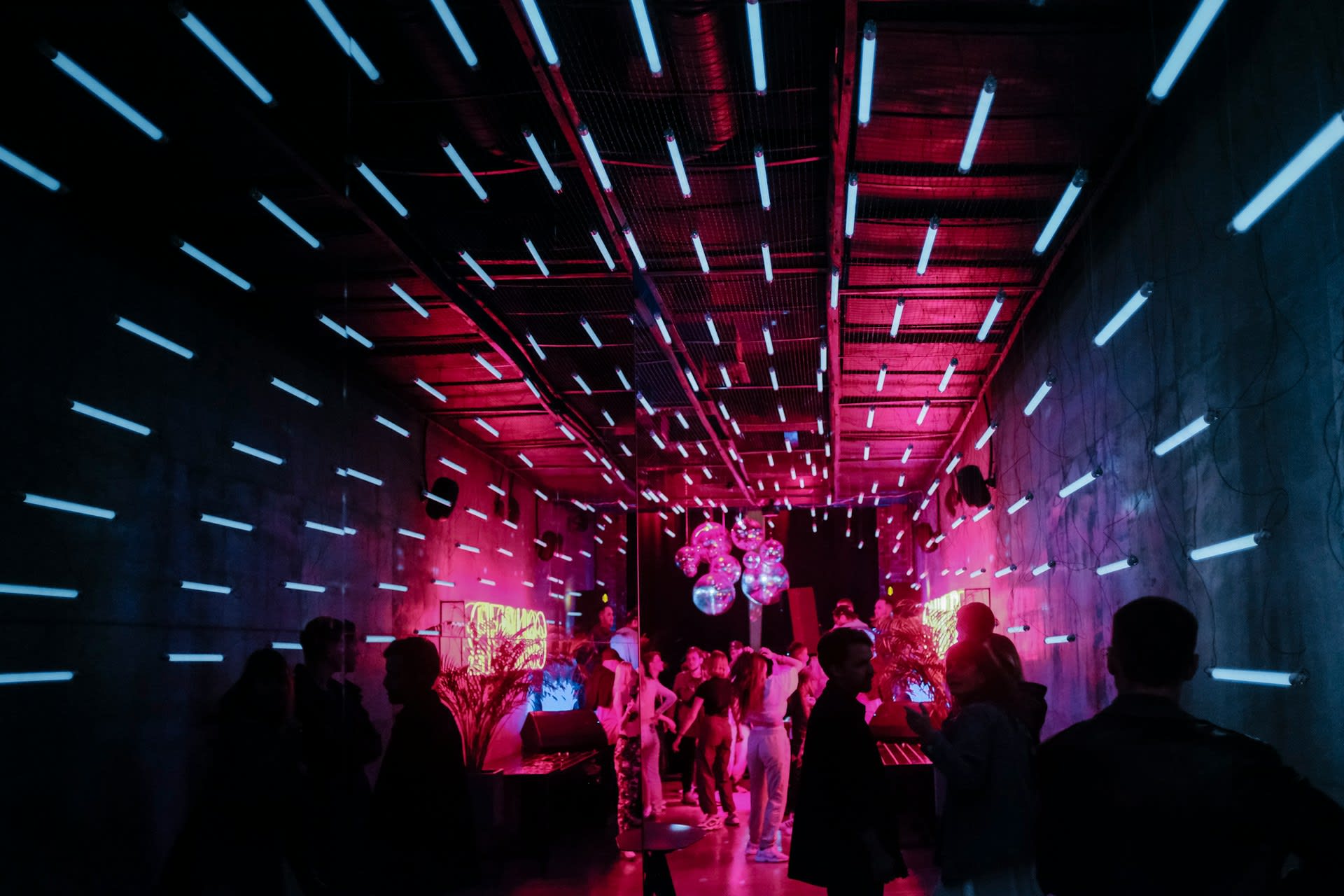
You can feel it the second you walk into a room.
Sometimes guests glide. They circulate. They discover things naturally. The event feels alive without feeling chaotic.
Other times? Everyone bottlenecks at the bar. Half the room never gets touched. Activations sit empty. Energy stalls for no obvious reason.
That’s not bad luck. That’s flow.
And whether you realize it or not, every decision you make in event planning either encourages movement or quietly shuts it down.
Guests don’t wander. They respond.
People love to say, “Guests will just explore.”
They won’t.
Guests respond to cues. Visual, spatial, emotional, and social. When cues are missing or conflicting, people default to safety. They cluster. They stand still. They gravitate toward what feels familiar.
Flow isn’t about telling guests where to go. It’s about removing hesitation.
When flow works, guests feel confident moving without thinking about it. When it fails, they feel awkward, exposed, or unsure and they stop.
That pause is where momentum dies.
Why the entrance decides everything
Flow starts before the bar, before the stage, before the first activation.
It starts at arrival.
The first 60 seconds determine how guests will behave for the rest of the event. If the entry moment feels confusing, cramped, or performative, guests carry that tension with them.
They grip their drink. They cling to who they came with. They avoid exploration.
A strong entry moment does the opposite. It gives guests orientation, permission, and confidence.
Clear sightlines. A natural first destination. Space to pause without blocking others. A sense of “you’re in the right place.”
When the entrance breathes, the room moves.
People move toward energy, not instructions
Signage helps. Maps help. But energy moves people faster than words ever will.
Guests follow sound, light, motion, and other guests.
If an area feels quiet, empty, or visually flat, guests assume it’s not important or not ready. If an area feels active, even subtly, people drift toward it.
This is why putting your biggest moment at the far end of the room without a trail of energy leading to it almost always fails.
Flow requires breadcrumbs.
Not literal ones. Sensory ones.
The invisible blockers that kill movement
Most flow problems are the result of blocks that are invisible until the bottleneck occurs. For example, placing the bar directly across from the entrance will create traffic congestion comparable to Midtown. Or tight seating will keep people in their chairs.
That’s why NYC event planners should visualize guests interacting with every element of the event’s design.
Why guests avoid empty spaces
Empty doesn’t read as “open.” It reads as “wrong.”
Guests instinctively avoid areas that feel unfinished, under-attended, or overly exposed. Especially in NYC events, where no one wants to be the first person doing the thing.
This is where planners accidentally sabotage good ideas.
You design a beautiful activation. It’s perfectly built. But it’s isolated. No one wants to break the seal.
Once one or two people engage, others follow. But getting that first engagement requires intentional seeding.
Staff presence. Soft lighting. A subtle audio cue. Even placing one confident guest in the space changes everything.
Flow depends on social proof.
The psychology of stopping points
Guests need places to pause.
Not dead ends. Not bottlenecks. Purposeful stopping points that feel natural.
These are places where guests can:
-
- observe without committing
- check their surroundings
- regroup with friends
- decide what to do next
If your event has nowhere to pause without blocking traffic, people will create their own pauses. Usually in the worst possible spots.
Good event design alternates movement and rest. Like breathing. Too much movement feels frantic. Too much rest feels stagnant. Flow lives in the balance.
Why bars control more than alcohol
The bar is the most powerful behavioral engine in the room.
Where it’s placed determines where people cluster, how long they stay in one area, and whether they explore at all.
A centrally placed bar encourages circulation outward. A corner bar pulls people into dead zones. Multiple smaller bars distribute movement better than one massive one.
Even bar orientation matters. A bar facing the room invites engagement. A bar backed against a wall creates a visual stop sign.
If your flow is broken, look at the bar first.
Programming can help or hurt flow
Run-of-show is not neutral.
Programming that stacks moments without breathing room freezes movement. Programming that creates anticipation encourages it.
Guests move when they sense a shift coming. They stay put when they feel like they might miss something.
This is why constant “must-see” moments actually reduce exploration. Guests camp out.
Strategic gaps, ambient moments, and optional experiences give guests permission to roam.
Flow thrives on trust.
Designing flow for different guest personalities
Not everyone moves the same way. Some guests lead. Some follow. Some observe before acting. Great event planning accounts for all of them.
When it comes to traffic flow, there are three types of guests. The first are the leaders, and watch out because they need clear pathways. The next are the participants, and they’ll congregate where the crowd is.
Finally, you have the observers. They may look like wallflowers. But if you give them a safe vantage point from which to observe, they’ll use it to identify their tribe and their vibe. Then, they’ll set out to become the wittiest and funnest participants.
This is especially important in immersive events, where forced participation can shut people down instead of drawing them in.
Flow is not control. It’s choreography.
The goal isn’t to manage guests. It’s to guide them.
When flow is designed well, guests feel free. When it’s designed poorly, they feel constrained.
The irony is that freedom requires structure.
Invisible structure.
That’s the science part.
Learn how top NYC event planners design flow at The Event Planner Expo 2026
Managing traffic and flow at events is both a science and an art. NYC event planners can study with the best at the industry’s premier expo.
Get tickets to The Event Planner Expo 2026 and learn from planners and producers who understand that guest movement isn’t accidental. It’s designed.
Because when guests move with ease, everything else falls into place.