The Next Evolution of Interactive Installations for Events (Spoiler: It’s Not Selfie Walls)
Interactive installations used to be about creating a moment guests could photograph. That bar is gone.
Your audience now walks into events having already seen everything from mirrored tunnels to floral walls to LED quote backdrops. They’ve shared it. They’ve scrolled past it. And they’re far less impressed by anything that exists purely to be looked at.
What’s replacing selfie walls isn’t louder, shinier, or more expensive. It’s responsive. It’s adaptive. And most importantly, it’s built around how guests actually move, decide, and engage once they’re inside the room. Interactivity is becoming structural to how events work.
Static Installations Don’t Hold Attention Because They Don’t Give Guests Agency
The biggest issue with legacy interactive installs isn’t that they’re outdated. It’s that they don’t ask anything of the guest beyond showing up.
A static installation offers a single action: stop, pose, leave. The experience is over. There’s no incentive to return, no curiosity loop, and no evolving payoff as the event unfolds.
Modern event guests expect more because the environments they live in every day are already responsive. Phones adapt. Feeds personalize. Interfaces respond instantly. When an event environment doesn’t do the same, it feels passive by comparison.
Interactive installations that perform well now are designed to:
-
- Change based on guest behavior
- Encourage exploration instead of posing
- Create multiple entry points, not one moment
Want to learn more about how guest attention spans are reshaping event timelines? Check out this blog.
Augmented Reality Is Succeeding Because It Rewards Curiosity, Not Compliance
AR works best when it doesn’t announce itself. Instead of pulling your guests out of the physical environment, augmented reality adds layers to it. That’s why AR experiences tied to physical installs are outperforming standalone tech activations.
When AR is integrated well, it creates a sense of discovery. Your event guests scan, explore, and unlock content because they want to know what happens next, not because someone told them to download something.
Where AR is being used strategically
AR installations are currently strongest when they:
-
- Overlay storytelling or product context onto physical elements
- Turn wayfinding into exploration
- Power scavenger hunts that drive foot traffic
- Add digital depth to otherwise simple builds
The result is longer dwell time without congestion. Guests keep moving, but they move with intention.
Ever wonder how to decide which event trends are worth the investment? Check out this blog.
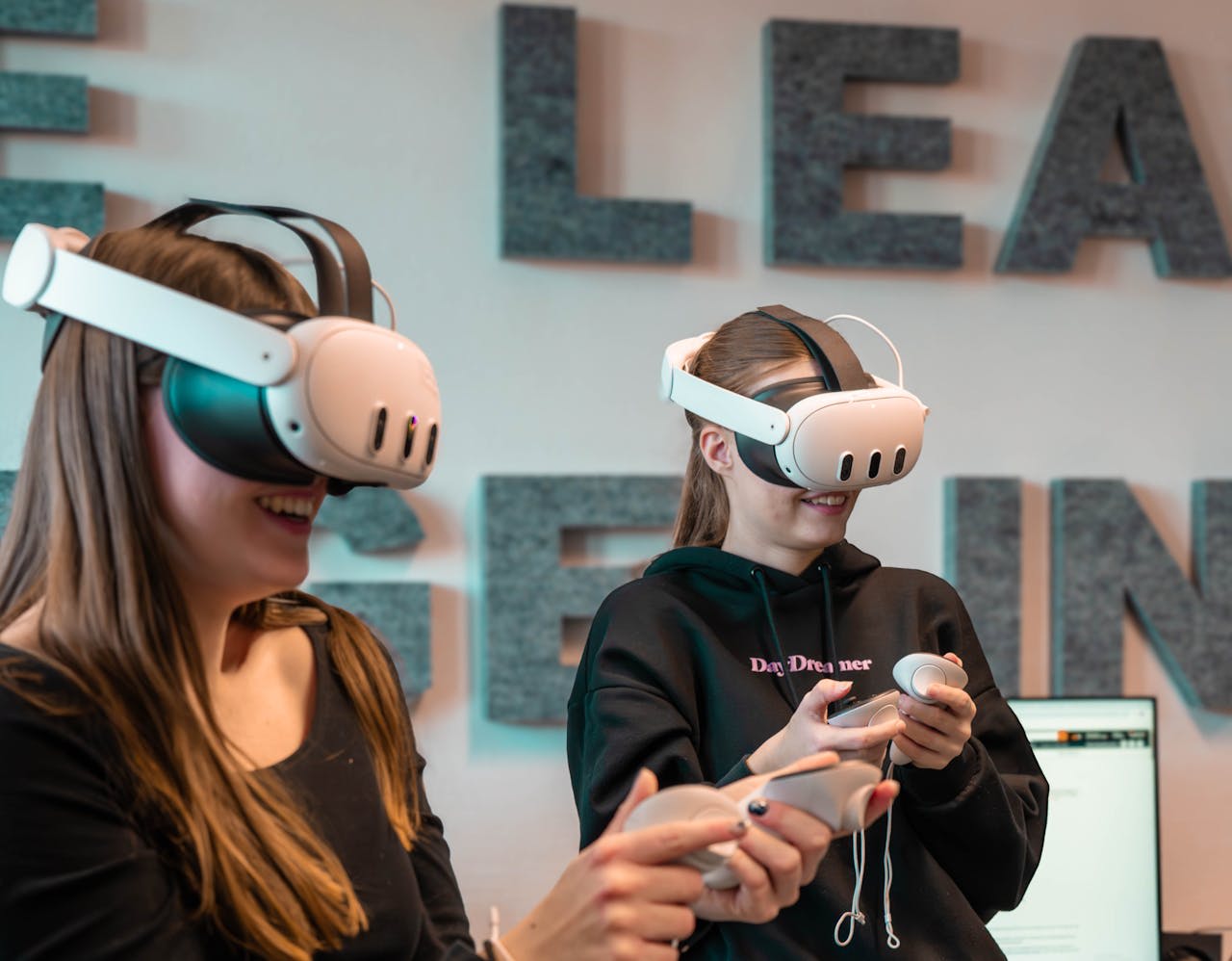
Virtual Reality Works Only When the Experience Has a Clear Narrative Job
VR hasn’t disappeared, but it has narrowed. The mistake many planners made early on was treating VR like a novelty station. Guests lined up, tried it once, and moved on. That model rarely justified the footprint or the spend.
Where VR still works is when it does something the physical environment can’t. The key is duration and focus. Short, purposeful VR experiences outperform long demos that isolate guests from the room.
And when you’re able to pull off a successful VR activation, it feels like a chapter in the event story, not a side attraction.
AI-Powered Installations Are Raising Guest Expectations
Guests now expect experiences to adapt to them, not the other way around.
AI-powered installations are changing how interactive moments scale without becoming generic. Instead of producing identical outputs for every guest, these installs can adjust in real time based on input.
These could be in the form of personalized visuals, dynamically generated content, or interactive outputs. And the reason these installs perform well isn’t because guests care about AI. It’s because they care about relevance. When something feels designed for you, engagement deepens naturally.
This is especially powerful for:
-
- Photo and video activations that move beyond templates
- Generative art experiences that evolve per guest
- Smart interactive displays that guide decisions without friction
Projection Mapping and LED Walls Are Becoming Interactive Systems, Not Backdrops
Projection mapping and LED walls used to exist to be admired. Now they exist to be used. The most effective installs no longer display fixed visuals. They behave like living systems that respond to movement, input, and collective participation over time.
Guests don’t need instructions to understand this. The moment they see a wall respond to touch, motion, or crowd behavior, the interaction becomes intuitive.
What’s driving engagement here
Responsive visual environments are succeeding because they:
-
- Change throughout the event instead of repeating
- Reflect real-time data, input, or participation
- Act as both environment and experience
These installations often carry multiple roles at once. They anchor a room visually, guide energy flow, and serve as interactive touchpoints without needing to be reintroduced.
Gamification Is Working Again Because It’s Embedded, Not Announced
Gamification fell out of favor when it became performative. Points, badges, and leaderboards without context rarely moved behavior. The current wave works because game mechanics are woven into the experience itself.
Instead of telling attendees they’re playing a game, the environment nudges them into challenges, exploration, or decision-making that feels natural to the event.
Multi-Sensory Design Is Doing What Screens Alone Can’t
Not all interactivity needs a screen. In fact, some of the strongest engagement is coming from environments designed around how guests physically and emotionally experience a space. Lighting cues movement. Texture invites touch. Sound design shapes mood without overwhelming conversation.
This approach works because it reduces cognitive load. Guests don’t have to learn how to interact. They just do.
Multi-sensory design supports:
-
- Longer conversations
- More organic movement
- Reduced screen fatigue
In many cases, these environments feel interactive without ever being labeled like one.
Collaborative and Generative Art Is Creating Emotional Buy-In
Collaborative installations shift the relationship between guest and environment.
Instead of consuming the space, guests help create it. Over the course of an event, the installation evolves based on collective input, movement, or choice.
This creates emotional investment because guests see themselves reflected in the final outcome. The experience becomes shared, not staged.
These installs work particularly well when there’s a visible progression. As the event unfolds, so does the piece. By the end, it tells a story that belongs to the audience.
Interactivity Is No Longer a Moment, It’s Infrastructure
Interactive installations now influence how guests move, linger, and connect. They affect traffic flow, energy distribution, and memory formation. When designed well, they quietly guide behavior without instruction or interruption.
This is why interactivity can’t be treated as a bolt-on anymore. It needs to be considered alongside layout, programming, and run-of-show.
Before locking an installation, pressure-test it. If the answer is no, it’s probably decorative, not interactive.
-
- Does it respond to guests more than once?
- Does it evolve across the event timeline?
- Does it encourage movement without creating bottlenecks?
- Does it reward curiosity without explanation?
What This Means for Event Pros Planning 2026 Experiences
Guests are no longer impressed by spectacle alone. They expect environments that listen, adapt, and reflect their presence. The next evolution of interactive installations isn’t about adding more tech. It’s about using the right tools to create agency, relevance, and flow.
And the planners, producers, and marketers shaping what comes next are the ones pushing these conversations forward in the room, not just online.
Where These Conversations Continue with the Best of the Best
If you’re serious about designing events that outperform expectations in 2026, this is exactly the kind of thinking shaping the conversations at The Event Planner Expo 2026.
From experiential design and interactive technology to audience engagement and event marketing strategy, this is where high-level event pros connect, share what’s actually working, and future-proof how events are built.
Whether you’re attending to sharpen your edge or exhibiting to get in front of decision-makers driving the industry forward, now’s the time to get involved.
Get your tickets for The Event Planner Expo 2026 and be part of what’s next.