Best Production Restraints That Made Events Feel More Premium

Clients still make the mistake of thinking that premium means more. Quality and quantity are not the same. It’s our job as top NYC event planners to know the difference. In 2026, the events that read as premium are not the ones doing the most. They are the ones making sharper decisions about what not to do.
1. Limiting the Number of Focal Points
When there are too many focal points, people don’t know where to focus their attention. They end up trying to look at everything and will miss much of it. Nothing lands effectively or is memorable.
A premium event pulls this back. There are one or two primary focal points. Then there are limit supporting moments. Top NYC event planners know how to concentrate attention.
2. Restraining Color Instead of Expanding It
Sometimes, event planners use color to inject energy into an event. It’s often overdone and ineffective. While it stimulates guests visually, it doesn’t convey control or sophistication. When done poorly, it looks downright gimmicky.
To create a premium feel, color should be used intentionally and with restraint. That doesn’t mean limiting its use. It means using it intelligently to highlight key moments.
3. Reducing Physical Builds in Favor of Atmosphere
Large-scale builds used to define high production.
Custom structures. Branded environments. Heavy fabrication.
They still have a place, but they are no longer the default.
In NYC, where load-ins are tight and labor costs are high, planners are asking a more direct question.
Does this build actually improve the experience?
If the answer is unclear, it does not make the cut.
Atmosphere is taking over.
Lighting.
Sound.
Spatial layout.
These elements shape how a room feels without adding physical weight.
A well-lit space with strong depth and contrast will read more premium than a crowded room filled with installations.
This is not about reducing effort. It is about shifting where effort is applied.
4. Holding Back on Programming Density
Stop letting clients pack as much as possible into the event timeline. More is not always better. Too many speakers, too many segments, too many transitions make an event feel chaotic and rushed. Guests will become fatigued and stop paying attention.
A single strong segment that lands will outperform three that are rushed. In NYC, where guests often arrive late and leave early, pacing becomes even more critical. Overloading the schedule guarantees that key moments will be missed.
5. Controlling Branding Instead of Expanding It
Brand visibility has been pushed aggressively in recent years.
Logos everywhere.
Step-and-repeats.
Branded surfaces on every available inch.
It ensures visibility. It does not always ensure alignment with a premium experience.
Restraint is shifting this approach.
Branding is becoming more integrated and less overt.
A logo placed with intention carries more weight than one repeated excessively.
A subtle brand cue within the environment feels more elevated than a direct imprint on every surface.
In high-end NYC events, over-branding can quickly read as transactional.
Controlled branding reads as confident.
It suggests that the brand does not need to force recognition. It assumes it.
6. Simplifying Layouts to Improve Flow
Complex layouts often come from trying to include everything.
Multiple activations.
Layered seating areas.
Dense traffic patterns.
The result is friction.
Guests hesitate. Movement slows. Energy breaks.
Premium events simplify.
Clear pathways.
Defined zones.
Logical progression through the space.
This is not about making the room empty. It is about making it readable.
Guests should understand how to move without thinking about it.
In NYC venues, where layouts are often constrained by architecture, this level of clarity is what separates smooth events from ones that feel disjointed.
7. Using Lighting as the Primary Driver of Change
You don’t have to rebuild the layout or the event space for each segment. This creates a stopping and starting effect that breaks up the event’s flow. Lighting changes are a more effective method for signaling change.
Dim the lights to signal a transition. Shine a focused light where you want the event guests to pay attention. Change the temperature of the light to signal mood changes. Brighter light is more energetic. Warmer light is cosier and more subdued.
Lighting changes can happen without interruption. Guests experience a smoother event and aren’t pulled out of the moment.
8. Reducing Noise to Increase Impact
Sound is often treated as background.
Music playing constantly.
Ambient noise filling every gap.
Microphones competing with room chatter.
It creates energy, but it also creates fatigue.
Premium events are using sound more selectively.
Moments of quiet.
Controlled audio levels.
Intentional use of music instead of constant presence.
Silence, when used correctly, draws attention faster than noise.
It allows key moments to land without competition.
In NYC, where venues already carry ambient sound from the city itself, this restraint becomes even more valuable.
Not every moment needs to be filled.
9. Edit Guest Touchpoints
With pressure on the rise for personalized experiences, event planners may feel they need to create multiple touchpoints. There are check-in experiences, welcome activations, mid-event engagement activities, and exit moments. Each of these could be strong, but when combined, they are overwhelming.
Instead of diluting the event with too many experiences, create a premium experience with fewer. The ones that are kept can be more focused and invested in, creating a more meaningful and memorable experience.
10. Aligning Every Element to One Clear Direction
The most important practice of restraint is during decision-making. A premium events feels that way because it has a clear goal or focus. Every decision the event planner made was aligned with that singular goal.
When something doesn’t align or fit, it’s edited out. That restraint required the event planner to commit to a direction and follow through. Being able to execute this level of consistency is what make the top NYC event planners stand out from the crowd.

Learn More About Overcoming Production Restraints at The Event Planner Expo
Budgets are being looked at more closely than ever, while production rates aren’t slowing down. That means the stakes and demands are higher than ever for NYC event planners. The planners who are ahead of this are making better decisions.
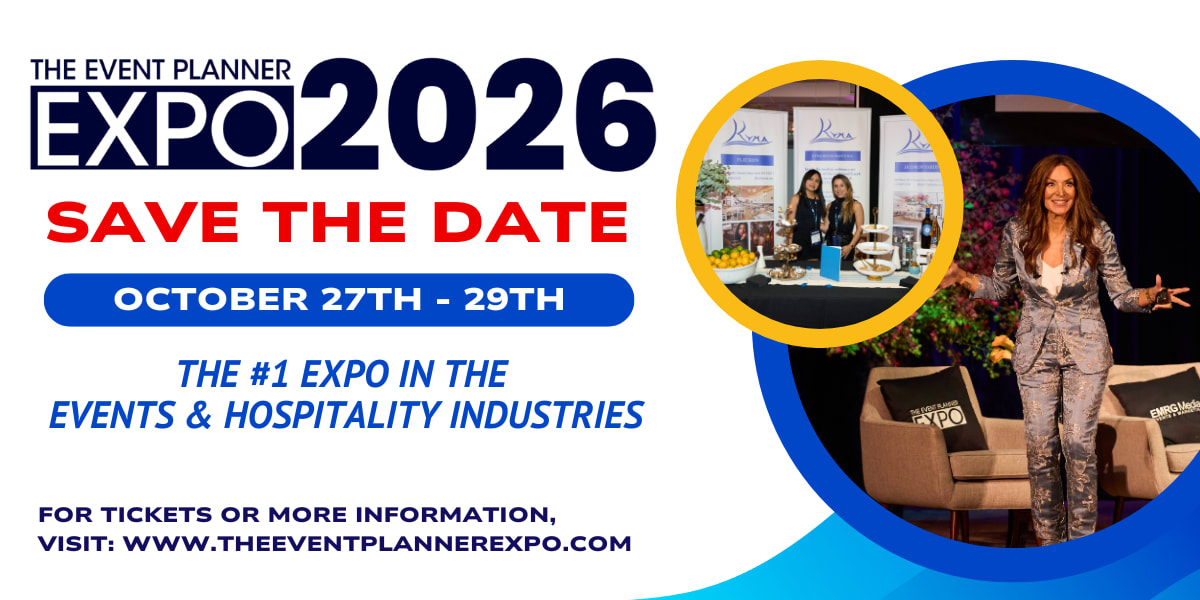
If this is how you are approaching event production moving into 2026, The Event Planner Expo 2026 is where these conversations are happening at a higher level.
Reserve your exhibitor booth at The Event Planner Expo 2026 and position your brand alongside planners who are redefining what premium actually looks like in modern event spaces.