What “Soft Arrival” Really Looks Like at Premium Events
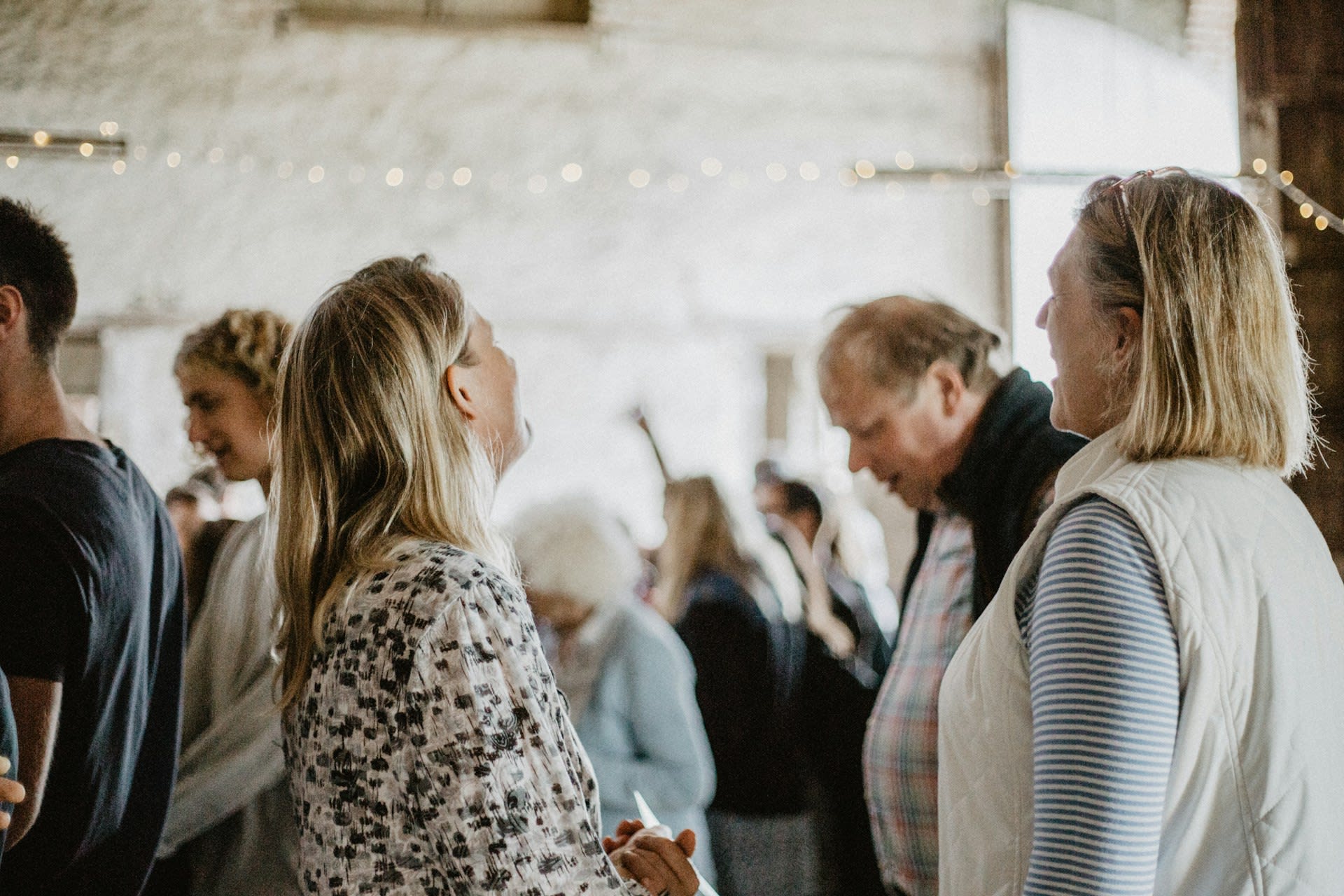
Guest arrival doesn’t need to be a big over-the-top production. Sure, you want to make a strong first impression. However, that doesn’t mean it needs to be dramatic or disruptive. At premium events, especially in New York City, that disruption is being designed out.
1. The Handoff From Outside to Inside Is Almost Invisible
A strong arrival experience starts before guests enter the venue’s doors. Top event planners start the experience as guests approach. They are oriented to the planned experience with subtle cues. In NYC venues, where entrances are often shared, compressed, or visually busy, this takes more intention.
It’s about more than just managing the doorway. There’s a natural transition from outside to inside that feels seamless. If it is smooth, guests carry their momentum straight into the event.
2. Check-in Does Not Feel Like a Process
Everyone knows what to expect at check-in. No one looks forward to it. We all go through the motions just to get through it. At premium events, check-in is being reduced to its simplest form. Fewer steps. Faster confirmation. Minimal interaction unless it adds value.
3. First Visual Read Is Controlled
Guests form their opinion about the event within seconds of stepping through the door. They take in the lighting, the layout, where people are gathering, and sound levels. If the room feels chaotic, it will create friction. If the room feels organized, the room feels intentional.
A soft arrival is about making a good impression while not overwhelming guests. The room feels ready but not in fast motion.
4. Low Demand Early Moments
Guests are not ready to engage the second they walk in.
They are still adjusting.
Premium events give them space to do that.
No immediate asks. No forced interaction. No pressure to participate.
Instead, the environment invites them in gradually.
They can observe. Take in the space. Decide how they want to engage on their own terms.
That autonomy is what makes the experience feel comfortable.
5. Sound Eases Guests Into the Environment
When an event is too quiet, it’s deafening. The space feels empty, and the energy is lacking. The opposite isn’t good either. Too much or too loud noise is overwhelming. Experienced event planners know how to create the right balance.
Upon arrival, sound sets the tone without demanding attention. Ambient levels that fill the space without competing with conversation. In NYC venues, where outside noise, shared spaces, and acoustics vary, adjustments are required.
6. Staff Guideline Without Interrupting
The way staff behave at arrival sets the tone for the entire event.
If they are overly directive, it creates pressure.
If they are absent, it creates uncertainty.
Soft arrival sits in between.
Staff are visible, but not intrusive. Positioned where they are needed, but not clustering. Ready to assist, but not leading every interaction.
Guests should feel supported without feeling managed.
That balance is what makes arrival feel effortless.
7. Movement Is Continuous
Try to prevent guests from moving and stopping and then moving again. Those stops create mental and physical breaks in the event’s flow. A soft arrival ensures the moment stays continuous.
It should be easy for guests to see and know the next step. They should feel like they are moving at a natural pace through the arrival process. In NYC, this can be a challenge because space is limited. It’s easy for bottlenecks to happen when space gets tight.
8. First Interactions Feel Optional
Guests should not feel like they are being pulled into something immediately.
Whether it is a drink, an activation, or a conversation, the first interaction should be easy to engage with or bypass.
That flexibility reduces pressure.
It allows guests to enter the experience at their own pace instead of being directed into it.
At premium events, this is handled subtly.
Nothing feels like a checkpoint.
Everything feels like an option.
9. The Environment Signals How To Behave
Guests are constantly reading cues. Successful event planners use this to their advantage. Guests pay attention to how other people are dressed, what they are doing, and how they are moving throughout the venue.
Event planners help guests read these cues by making it easier with clear sightlines and intuitive directions. If the event is meant to feel elevated, the entry reflects that. If it is more relaxed, that is communicated immediately.
NYC Changes the Expectations
In NYC, guests often come from another meeting or event and are navigating tight schedules. They do not have time to adjust slowly. That makes the first few minutes even more important. If guests find arrival difficult or tedious, they will disengage more quickly. If it feels easy, they are more likely to stay and be more mentally attuned to the event.

Learn More About ABC at The Event Planner Expo
Arrival is becoming part of how events are evaluated. Not just by guests, but by clients and stakeholders. It sets expectations for everything that follows.
Planners who are treating it as a designed experience, not just an operational step, are seeing stronger engagement from the start. This is shaping conversations around guest experience and event flow as we move toward The Event Planner Expo 2026.
Get tickets to The Event Planner Expo 2026 and be in the room with NYC planners and producers who are refining how events are experienced from the very first step inside.